10% off on product page · save $83.99
Cat Tree Fabrics: Carpet, Plush and Sisal Explained
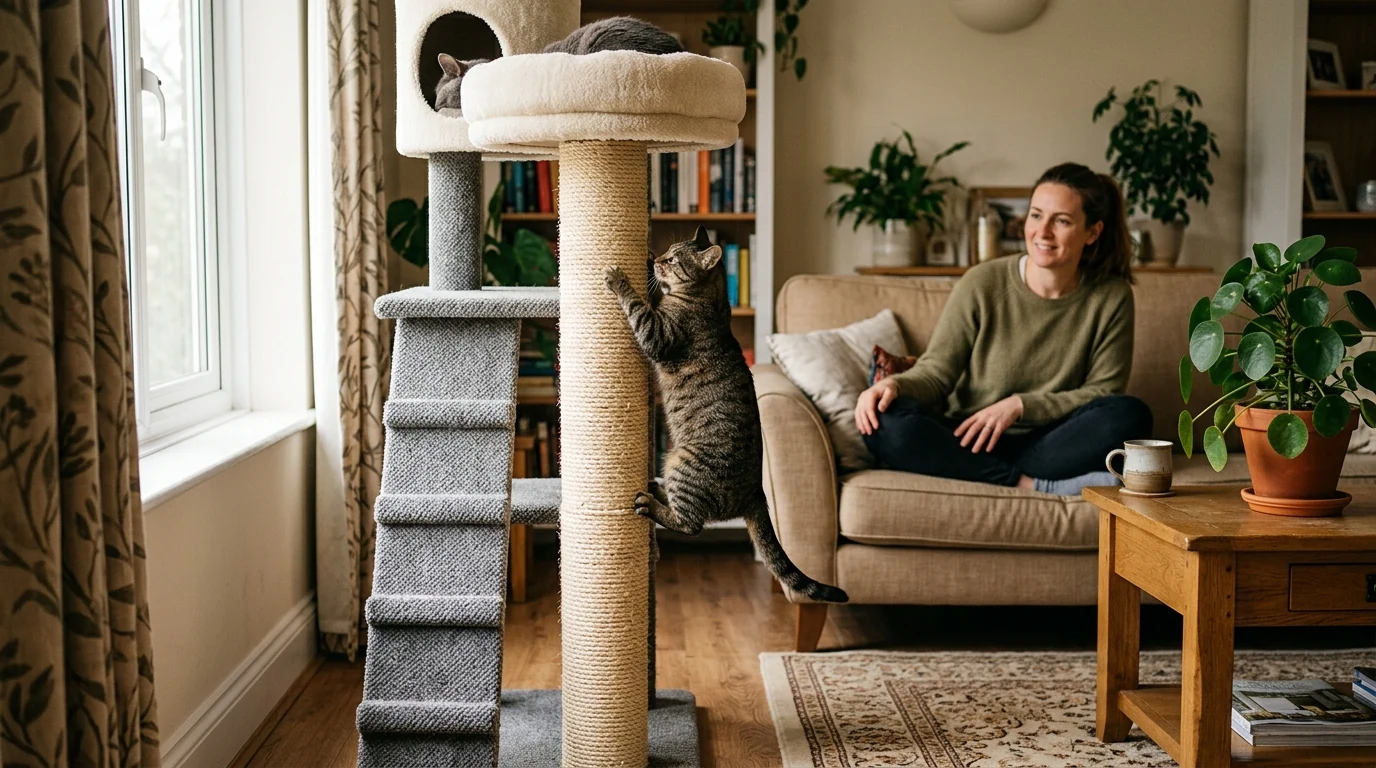
Most cat trees are covered in carpet or plush fabric, with sisal rope on the scratching posts. Carpet gives cats a grippy surface for climbing, while plush feels softer on platforms and enclosed perches. Before choosing a covering, consider where your cat climbs, scratches, and naps most often.
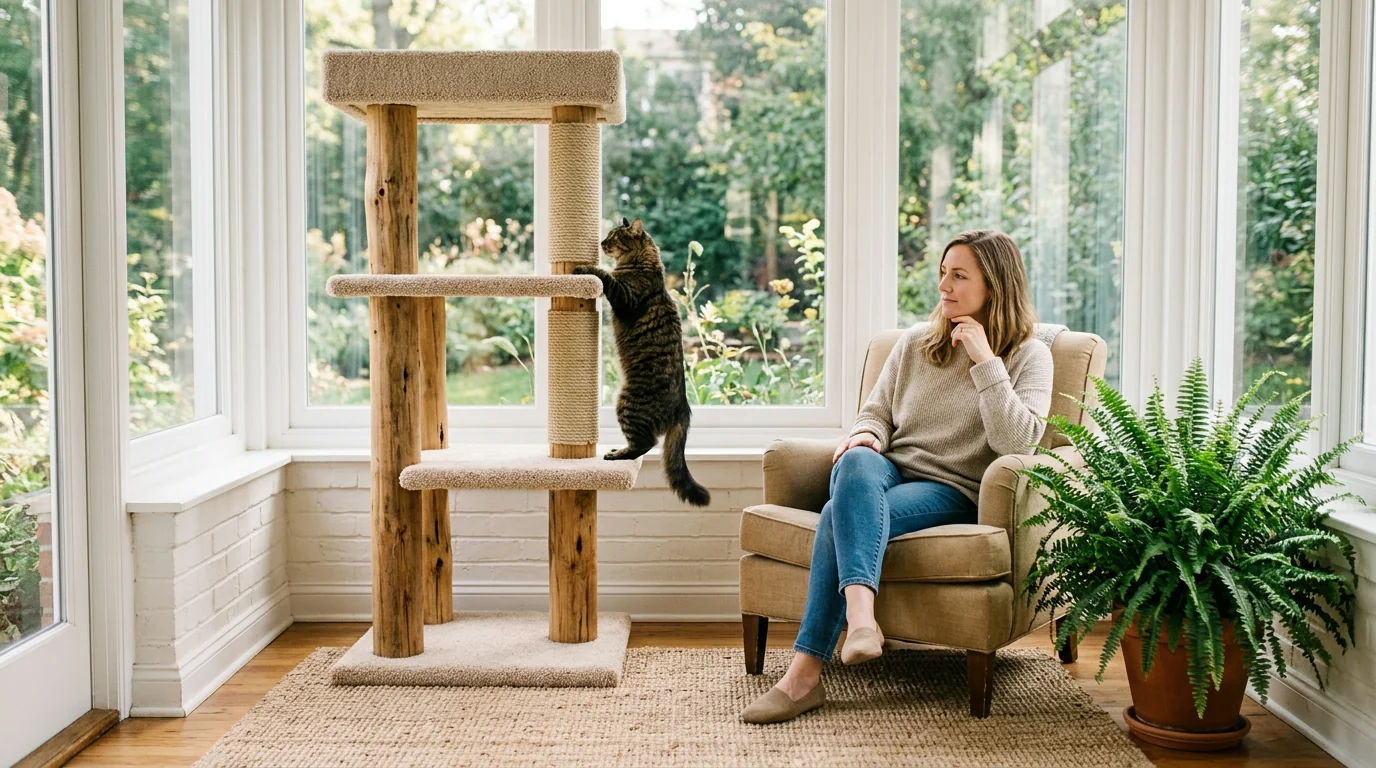
Low-pile carpet is a common choice for cat trees because claws can grip it without sinking into long fibers. It also holds up better to repeated climbing than many lightweight upholstery fabrics. For a replacement covering, choose a tightly woven, low-pile piece and check that its backing is flexible enough to wrap securely around the tree’s edges.
Featured in this guide
Modern Cat Climbing Tree with Multifunctional Table and Scratching Post
Faux fur, fleece-like fabric, and other plush coverings are often used on beds, platforms, and cubbies. These surfaces add softness, but they may show wear sooner if your cat regularly scratches them. Look for a covering that can be vacuumed easily, especially if the tree sits in a room where loose fur is noticeable.
Sisal is usually rope rather than fabric, but it is an important part of many cat trees. Its rough texture offers a dedicated scratching surface and helps distinguish the posts from soft resting spots. If you are replacing worn material, measure the post’s height and circumference before buying rope so you have enough to wrap it tightly.
The best combination depends on how the tree is built and how your cat uses it. Carpet can provide traction on ramps and climbing surfaces, while plush is better suited to spots intended for lounging. Check that any new covering can be attached without leaving loose edges, exposed staples, or bulky seams where paws may catch. For more ideas on balancing climbing space and scratching surfaces, see the guide to modern cat climbing trees and scratching posts.
Low-pile carpet is a practical choice for surfaces your cat climbs because it provides traction. Soft plush fabric works well on beds and lounging platforms that see less scratching.
Cat tree rugs or carpeted panels commonly use low-pile carpeting. Its short fibers give claws some grip and are generally easier to maintain than long-pile material.
Remove the worn covering and any exposed fasteners, then cut new fabric to fit each surface. Attach it securely, keeping staples out of reach and checking for loose edges before your cat uses the tree.
Carpet and plush fabrics are the most common coverings. Carpet is often used for climbing surfaces, while plush is frequently placed on perches and inside cubbies.
Start with the tree’s manufacturer to look for posts made for your model. If you shop for a compatible replacement elsewhere, compare the post length, diameter, and mounting hardware before ordering.

Leave a comment
You must be logged in to post a comment.