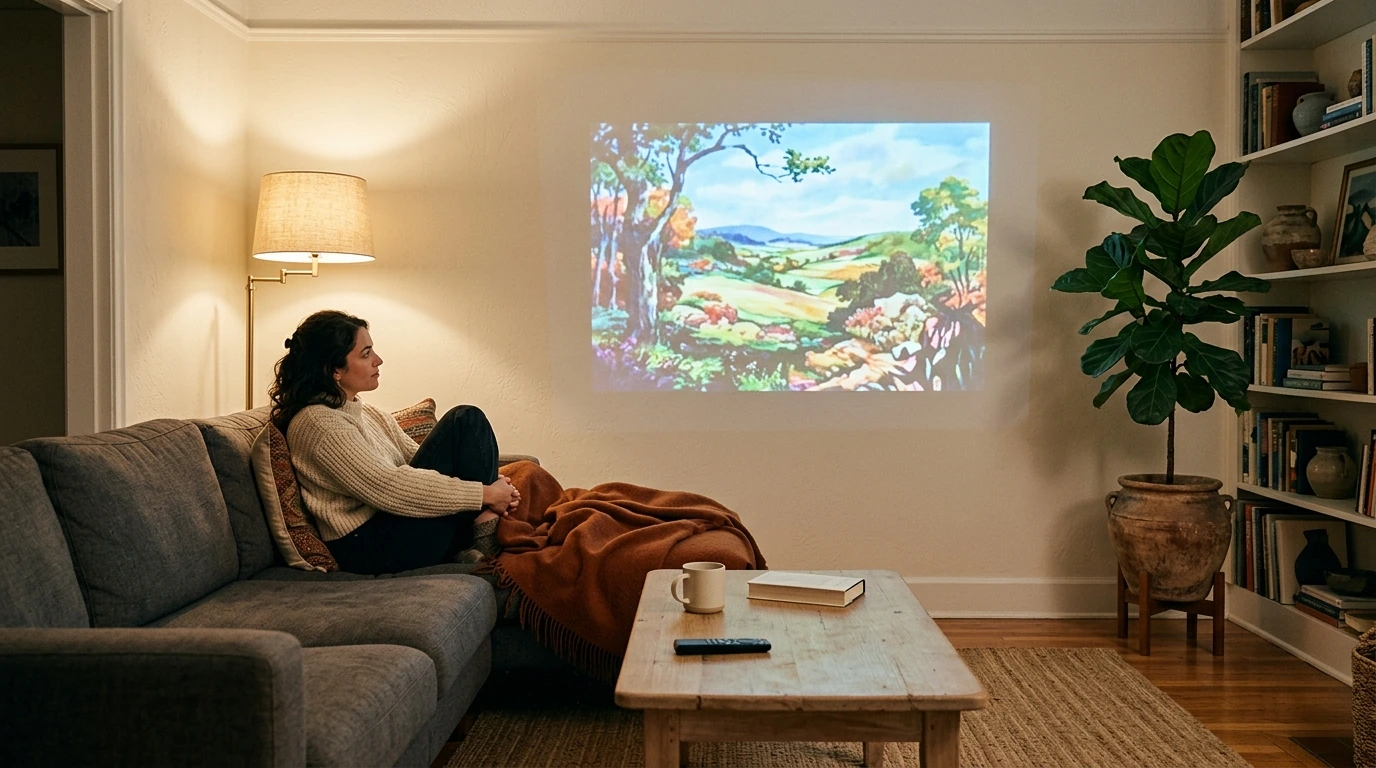
Projector Screen Substitutes: Walls, Fabric, and Panels
A smooth, matte white surface is the easiest substitute for a projector screen. A plain wall may be all you need; a white sheet, blackout fabric, or foam board can work when you want a temporary setup. For a sharper-looking picture, choose a surface that stays flat and place the projector squarely in front of it.
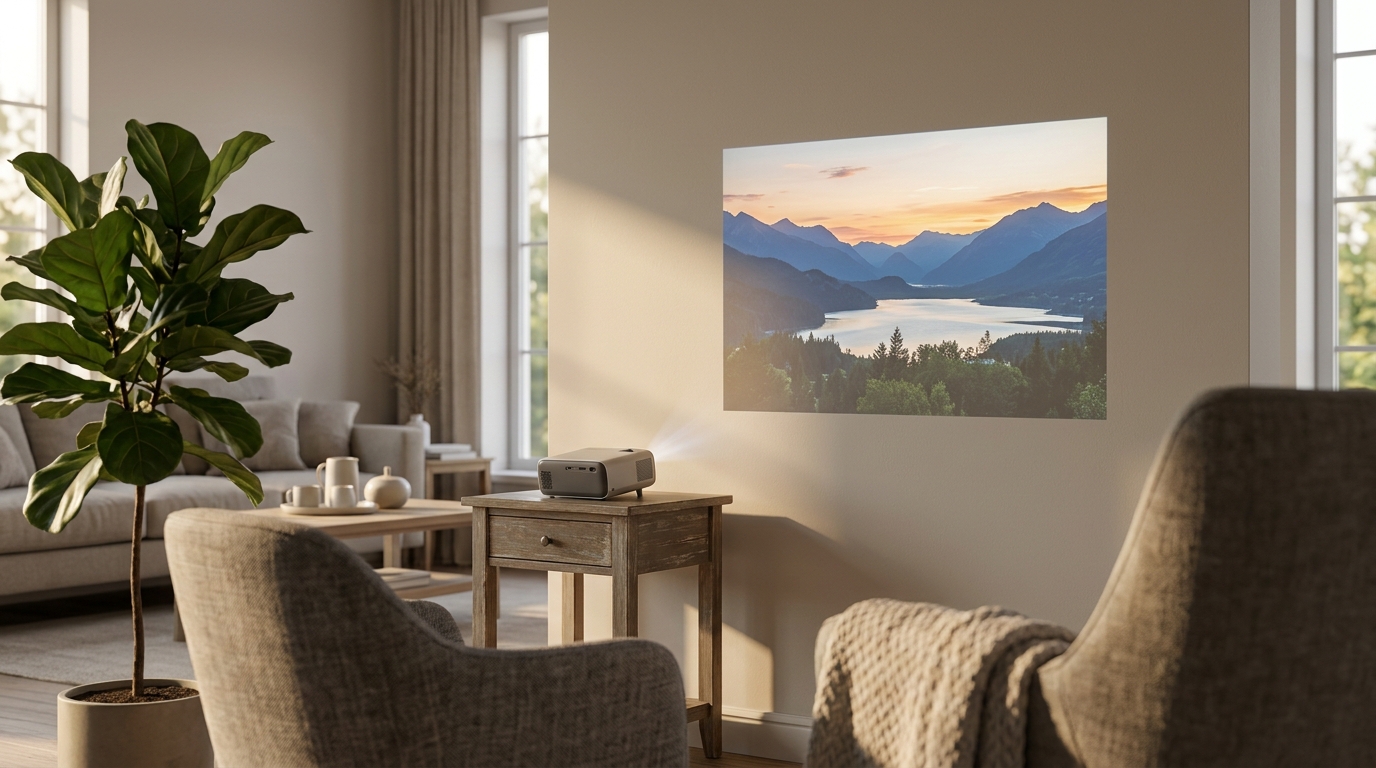
A clean, light-colored wall gives you a sturdy projection surface without any setup. Choose an area free of artwork, outlets, and pronounced texture, then dim the room and adjust the projector until the image fits. Dark paint or a glossy finish can make colors look less accurate or create distracting reflections.
Featured in this guide
4K Smart Mini Projector with 3D, Android OS, WiFi & Built-in Battery
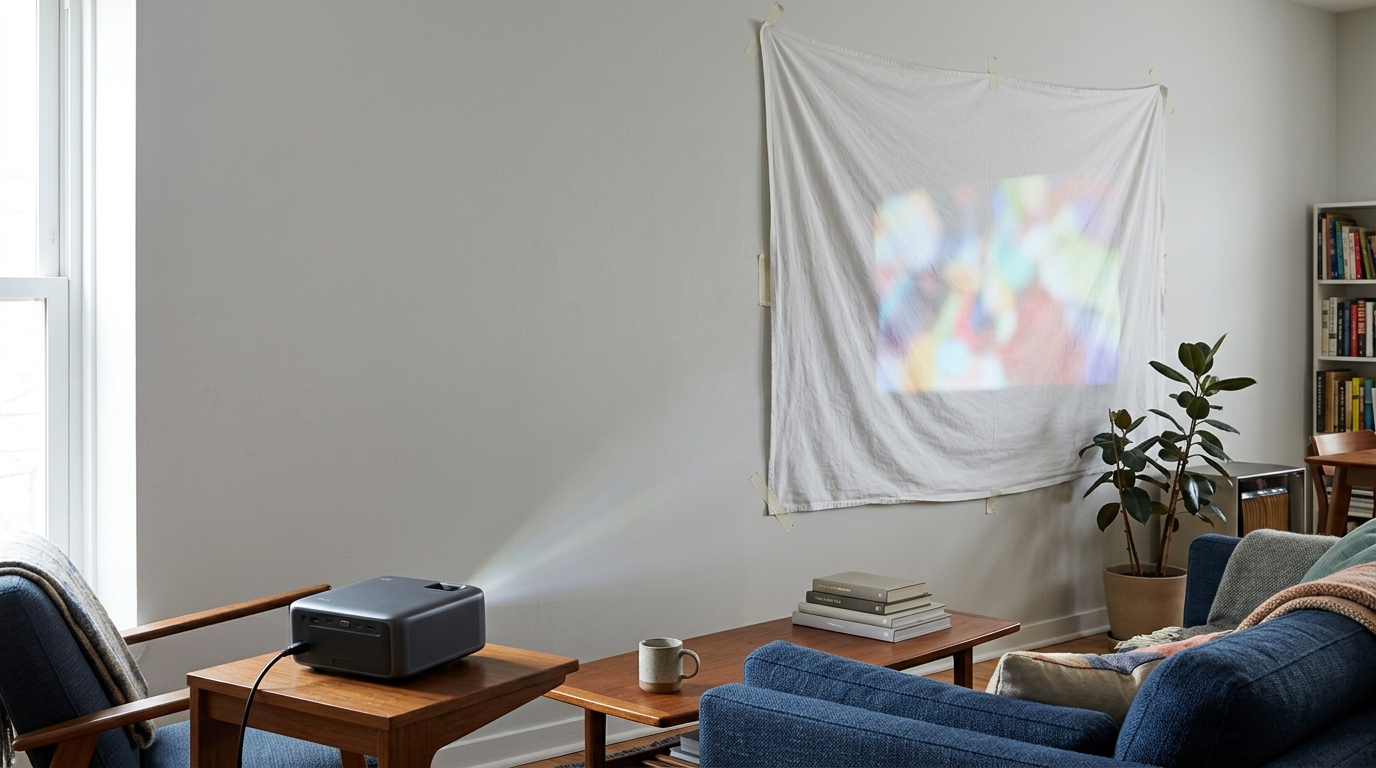
A white sheet is convenient, but light can pass through thin fabric and wrinkles can distort the image. Stretch it tightly across a frame or clip it along the top and sides. If you have blackout fabric, its denser weave generally makes it a better choice for a bright, even picture.
White foam board or a smooth, matte-painted panel is useful when you need a portable surface that will not ripple. Make sure the panel is large enough for the image you plan to project and support it securely so it cannot tip. Avoid glossy boards, which can produce a bright hotspot.
For the full product context, see the main Owleys guide.
A taut white sheet, blackout fabric, or matte white foam board makes a practical makeshift screen. Keep the surface flat to prevent visible waves in the picture.
A phone screen is too small to serve as a useful projection surface. If you want to show content from your phone, connect or cast it to a compatible projector and aim the projector at a wall or screen substitute.




Leave a comment
You must be logged in to post a comment.