10% off on product page · save $83.99
Why Are Cat Trees So Cheap? Materials and Safety
Many cat trees are inexpensive because manufacturers use lightweight engineered wood, cardboard scratching tubes, synthetic fabric, and mass-produced hardware. Standardized designs and flat-pack shipping also reduce production, storage, and delivery costs.
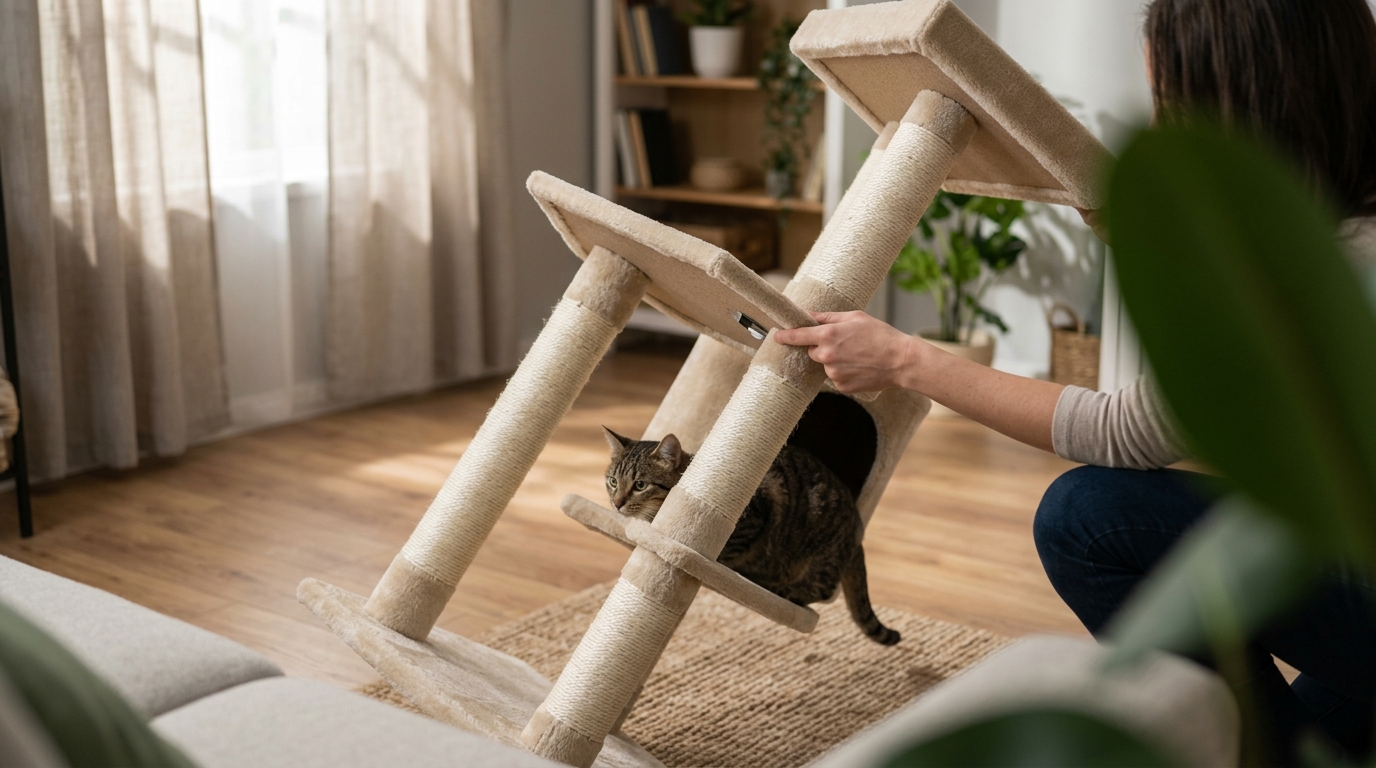
Budget cat trees commonly use particleboard rather than solid wood and polyester plush instead of upholstery-grade fabric. These materials can provide a comfortable climbing and scratching area, but they may wear faster under heavy use.
Featured in this guide
Modern Cat Climbing Tree with Multifunctional Table and Scratching Post
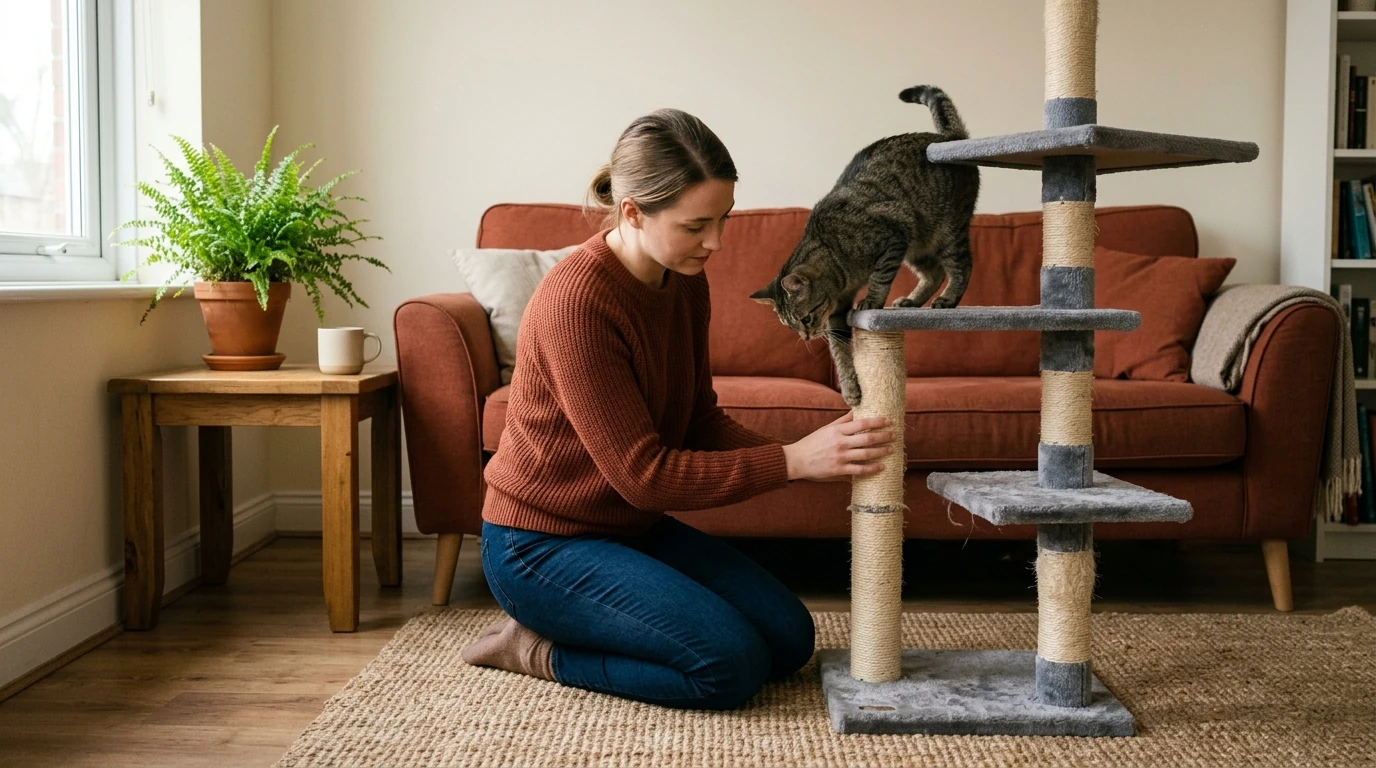
A basic tower with two platforms and a sisal-wrapped post requires fewer materials and assembly steps than a large modular structure. Before buying, compare the base dimensions, post thickness, weight capacity, and platform size with your cat’s measurements.
An inexpensive cat tree may work well for kittens or small, calm cats. Check for a broad base, tightly wrapped sisal, secure fasteners, and an anti-tip wall strap; wobbling, exposed staples, or thin cardboard posts are warning signs.
A sturdier model may be more economical if several cats will use it daily. Review the broader guide to modern cat climbing trees, tables, and scratching posts to compare configurations and choose a structure suited to your room and cat.
A cat tree is worth buying when it gives an indoor cat dedicated places to climb, scratch, rest, and observe. Select one that fits the cat’s size and natural activity level.
Some cat trees are expensive because they use solid wood, durable upholstery, thick sisal, replaceable parts, or furniture-style finishes. Larger dimensions and higher shipping costs can also raise the price.


Leave a comment
You must be logged in to post a comment.