10% off on product page · save $83.99
Which Cat Trees Are the Most Sturdy? Key Features to Check
The sturdiest cat trees keep weight close to the floor and give each perch a solid connection to the structure below it. When you compare designs, start with a wide, heavy base, thick posts, and platforms that do not extend far beyond their supports. Those features matter more to stability than the number of levels.
A broad base helps resist tipping when your cat jumps onto an upper platform or pushes off to leave it. Choose a footprint that extends beneath the climbing area, especially if the tree has a tall top perch. Place the tree on a level surface; a rocking base on uneven flooring will make even a well-built structure feel less secure.
Featured in this guide
Modern Cat Climbing Tree with Multifunctional Table and Scratching Post
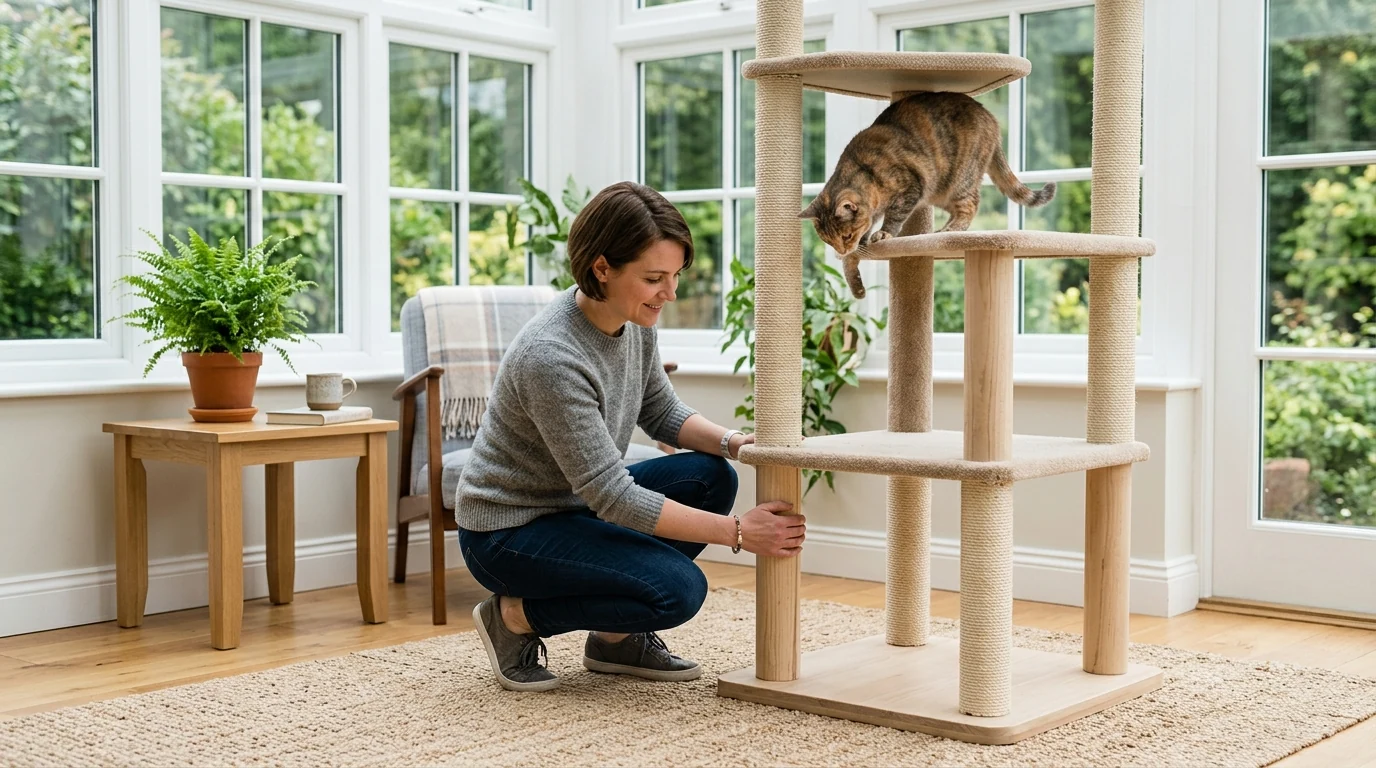
Thick posts and firmly attached platforms limit the side-to-side movement that can develop with daily climbing. Solid wood or dense engineered-wood components generally feel more substantial than thin, hollow pieces, while secure hardware keeps the structure tight. During assembly, tighten every connection as directed, then recheck it periodically as your cat uses the tree.
A compact arrangement of staggered platforms gives your cat routes up and down without relying on a long, unsupported overhang. For an active jumper, favor perches positioned over posts or the base rather than platforms projecting to one side. If your cat is heavy, prioritize a low center of gravity and a design whose stated weight capacity covers your cat’s weight.
Sturdiness also depends on how well a tree holds up after months of scratching and climbing. Durable post coverings, such as tightly wrapped sisal rope, provide a useful scratching surface without changing the tree’s structural support. Inspect posts, platform joints, and fasteners for wear; replace a damaged component when possible, and stop using a tree that cannot be made stable.
Before your cat uses a new tree, press gently on the upper platforms from different directions to see whether the base lifts or the joints shift. For a taller design, use a wall anchor when one is provided and compatible with your wall. Our guide to modern cat climbing trees and scratching posts can help you compare layouts and features after you have narrowed your choices to stable designs.
A cat tree with a wide, heavy base, thick posts, and securely attached platforms is typically the sturdiest choice. A compact layout with upper perches centered over the supports adds stability.
Choose a tree with a stated weight capacity that covers your cat’s weight, a broad base, and substantial posts beneath its main perches. Favor wide, well-supported platforms over narrow perches or long overhangs.




Leave a comment
You must be logged in to post a comment.