10% off on product page · save $83.99
Best Cat Tree for Indoor Cats in 2026: Buying Guide
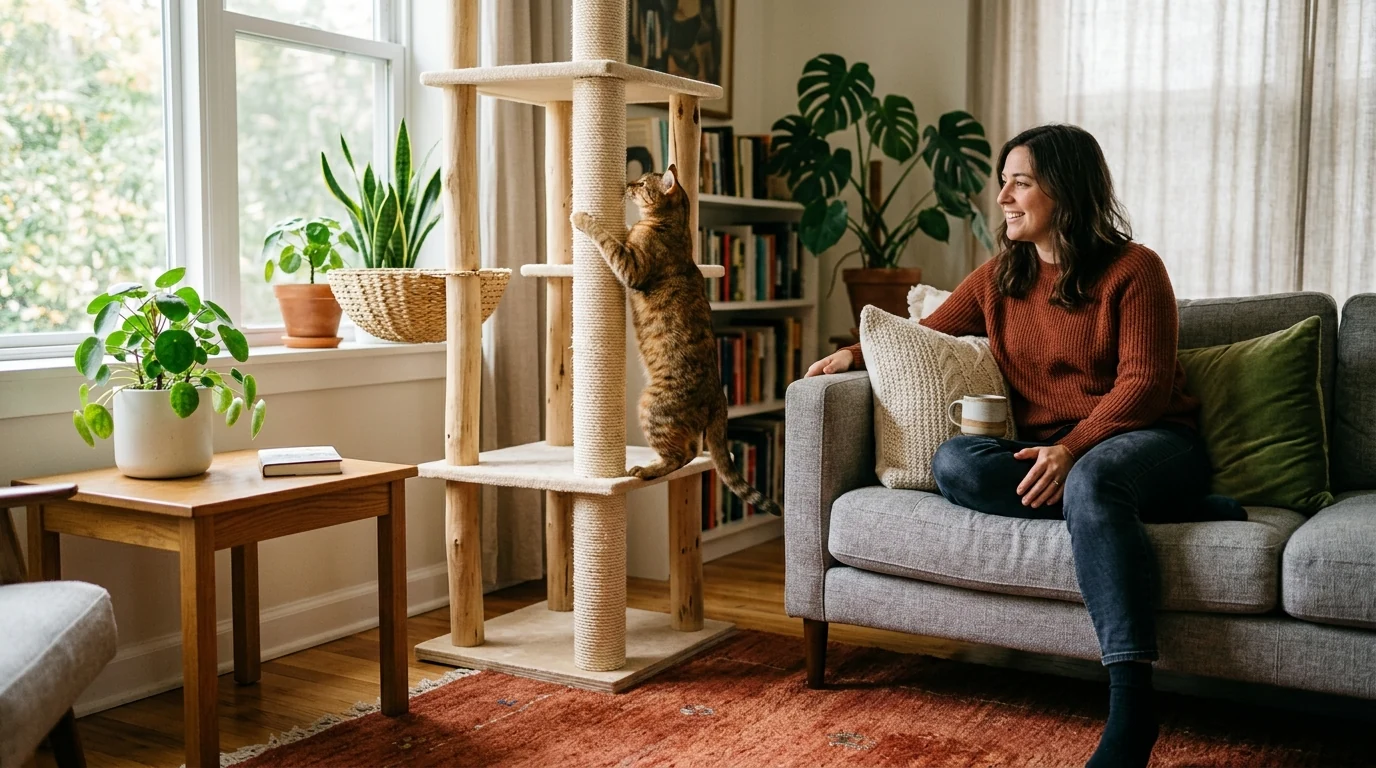
The best cat tree for indoor cats in 2026 is a stable, multi-level model with scratchable surfaces, comfortable resting areas, and platforms sized for your cat. Look for a wide base, replaceable sisal, low-emission materials, and a design that can be anchored to the wall.
A cat tree should remain steady when a cat jumps onto its highest perch. Choose a weighted base at least as wide as the upper structure, inspect hardware regularly, and use the included anti-tip strap—especially for trees over 48 inches tall.
Featured in this guide
Modern Cat Climbing Tree with Multifunctional Table and Scratching Post
Kittens and active adults often prefer tall towers with multiple routes upward, while seniors benefit from closely spaced platforms or ramps. For large cats, check the listed perch dimensions and weight capacity rather than relying on labels such as “large” or “XL.”
Sisal rope or sisal fabric provides a practical scratching surface, while removable, washable cushions simplify cleaning. Check that exposed edges are smooth and avoid loosely attached fabric, staples, or small decorative pieces that could be swallowed.
Measure the floor area and ceiling height before ordering, including clearance around doors and furniture. A narrow vertical tree can suit an apartment, but it should still have a broad base or wall connection to resist tipping.
Useful features include replaceable scratching posts, washable covers, enclosed hideaways, and spare parts. For additional options and selection guidance, visit the complete guide to the best cat trees for indoor cats.
The best cat tree for indoor cats is stable, appropriately sized, and equipped with scratching and resting areas. Select one that supports your cat’s full weight and can be anchored if it is tall or top-heavy.
Healthy adult cats with independent temperaments can often be left alone during a typical workday when they have food, water, clean litter, and enrichment. Kittens, seniors, and cats with medical or separation-related needs generally require more frequent attention.
Choose the right cat tree by considering your cat’s age, weight, mobility, scratching habits, and preferred sleeping position. Measure both your cat and the intended location, then verify platform dimensions and weight limits.
You can buy a high quality cat tree from established pet retailers, furniture brands, and reputable online stores. Review construction details, replacement-part availability, return terms, and verified customer photos before purchasing.
Many cats enjoy having a cat tree because it provides height, territory, scratching surfaces, and secure places to rest. Position the cat tree near a window or occupied room and introduce it with treats or familiar bedding.
Many cats enjoy climbing trees because climbing supports exploration, exercise, and observation from a protected height. Indoor cats can satisfy this instinct more safely on a stable cat tree, shelving system, or secured climbing wall.



Leave a comment
You must be logged in to post a comment.