35% off on product page · save $92.59
Build a Budget Outdoor Cat Shelter With a Plastic Tote
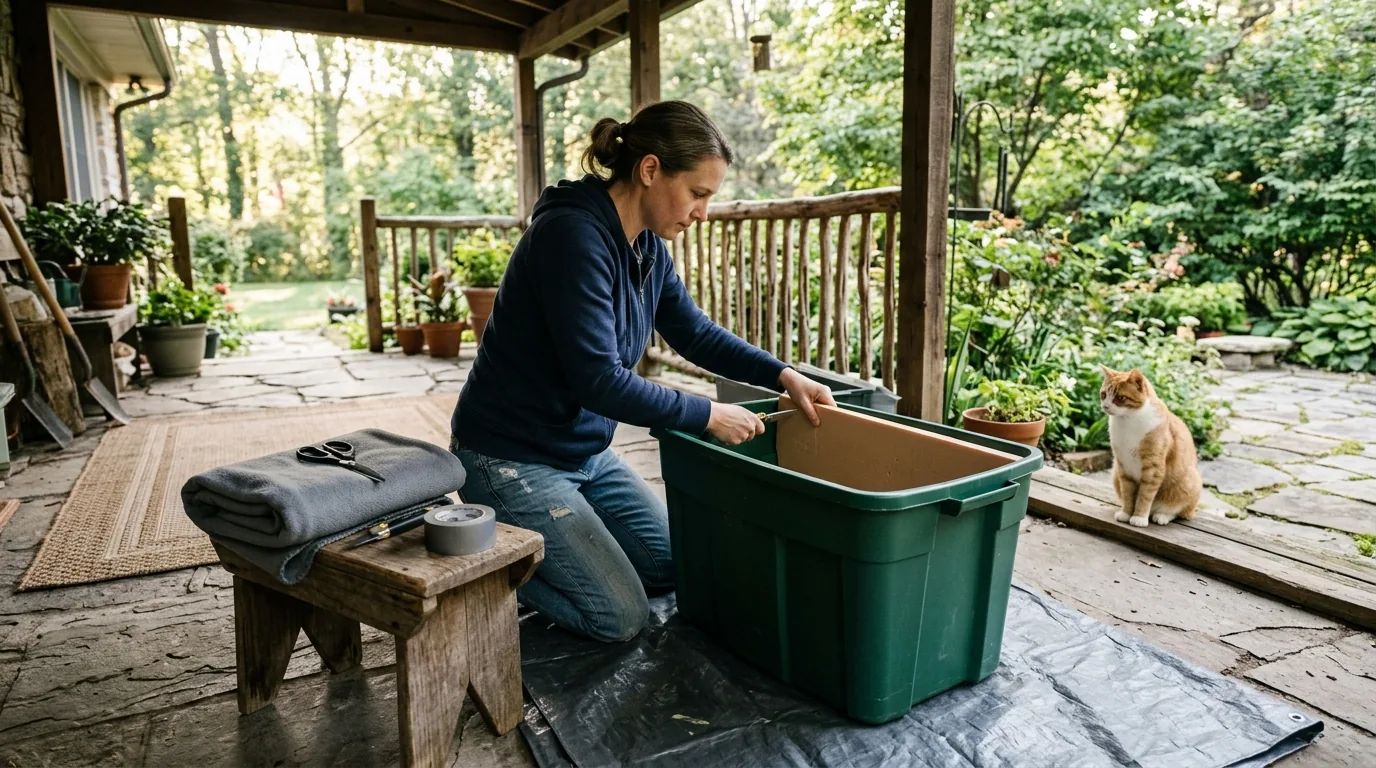
A sturdy plastic storage tote can become an outdoor cat shelter for much less than a premade house. Choose a tote large enough for a cat to turn around in, but not so large that its body heat will quickly escape. A 20- to 30-gallon tote is a practical starting point for one or two cats.

You will need a lidded plastic tote, rigid foam insulation, straw, a utility knife, and weather-resistant tape. Check that the lid snaps on securely and the tote has no cracks that could let rain inside. Use straw rather than blankets or towels for bedding: fabric absorbs moisture and can become cold outdoors.
Featured in this guide
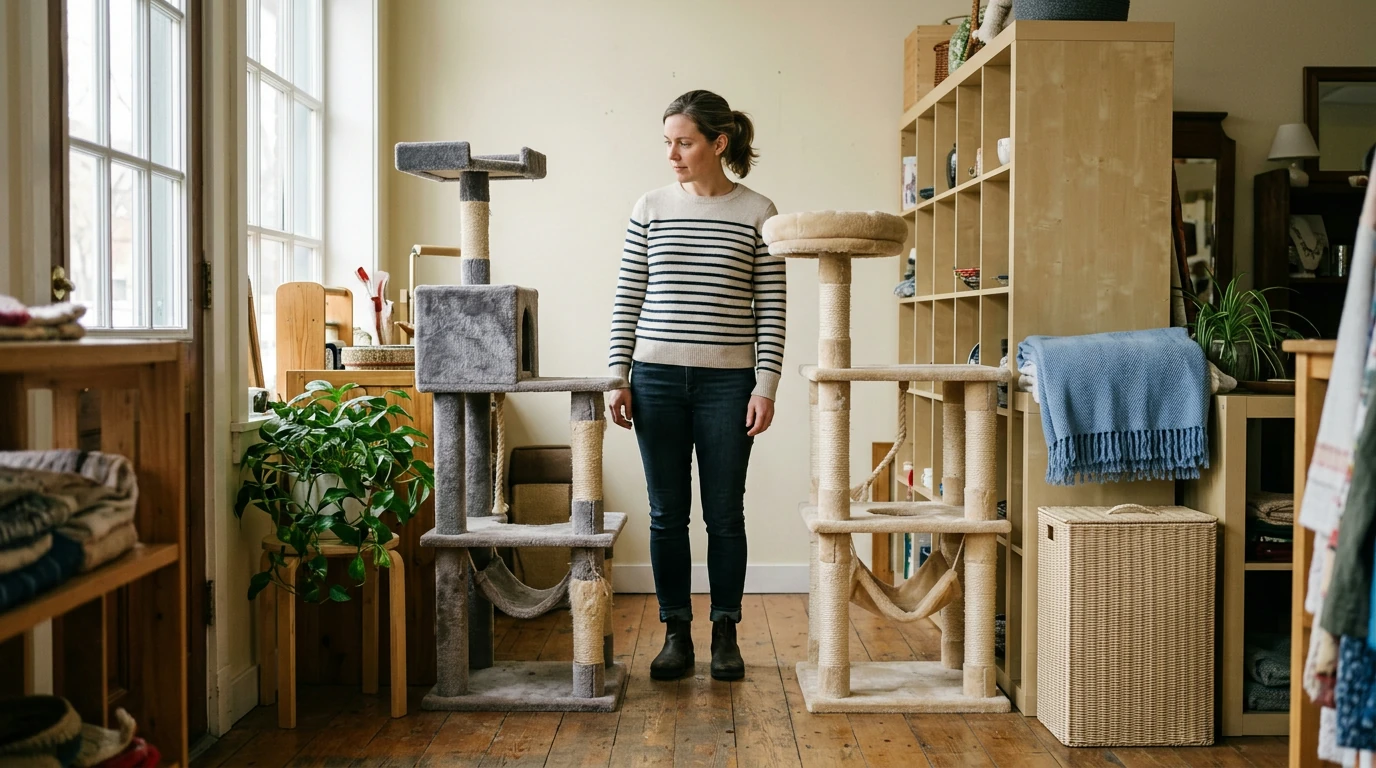
68-Inch Multi-Level Cat Tree Tower for Large Cats with Scratching Posts & Plush Perches
Cut an entrance about 5 to 6 inches across on one short side, a few inches above the floor to help keep out rain and snow. Smooth or cover the cut edge so it cannot scratch a cat. Line the floor, walls, and underside of the lid with rigid foam, leaving the entrance clear, then add several inches of loose straw.
Set the shelter on bricks, a pallet, or another stable base so water cannot pool underneath. Face the entrance away from prevailing wind and place the tote near a wall or fence for added protection. After a storm, check that the lid is secure, the inside is dry, and the straw has not become damp.
An outdoor shelter is for weather protection, not climbing or play. If you also want to make an indoor space more comfortable, see our guide to a multi-level cat tree for large cats. Keep any indoor cat tree dry, stable, and separate from an outdoor shelter exposed to the elements.
Use a sturdy wood frame and galvanized wire mesh to create a secure outdoor enclosure. Add a covered area for shade and check every edge, latch, and gap before allowing a cat inside.
Provide a small, insulated, weatherproof shelter filled with dry straw. Replace damp bedding promptly, and keep food and water available nearby rather than inside the sleeping space.
An insulated shelter can reduce exposure to wind and precipitation, but it cannot guarantee a cat’s safety in extreme cold. Provide food and unfrozen water, monitor the shelter, and contact a local rescue if a cat appears ill or distressed.



Leave a comment
You must be logged in to post a comment.