
How to Brush Hair Without Breakage: Gentle Tips
Start with the right amount of pressure: a brush should glide through your hair, not pull at your scalp. If it catches, stop and loosen the tangle with your fingers rather than forcing the bristles through it.
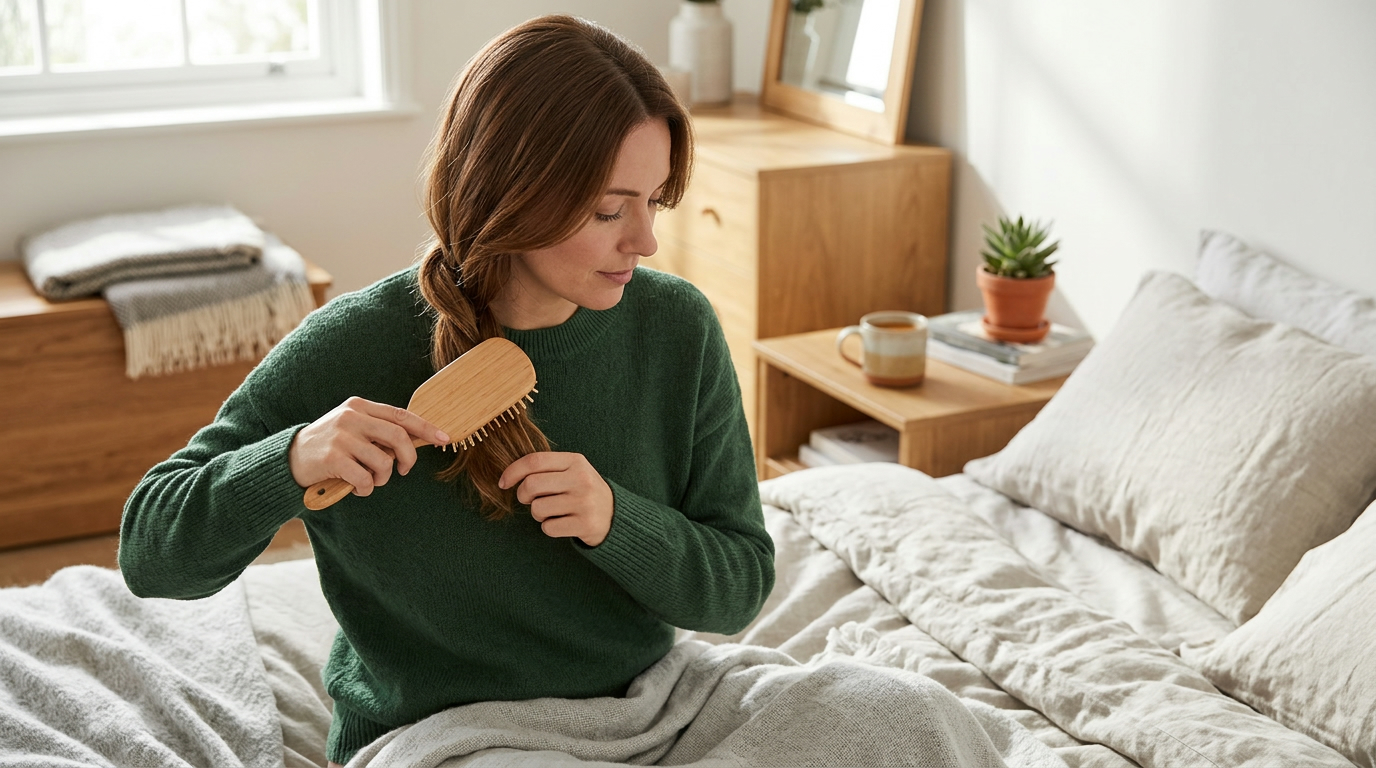
Divide your hair into manageable sections, then brush the bottom few inches of one section first. Once the ends move freely, work upward in small increments until you can make a smooth pass from roots to ends. Hold the section above a knot while you detangle to reduce tugging at the roots.
Featured in this guide
Multifunctional Hair Styler Brush
Flexible, widely spaced bristles can move through tangles with less resistance than stiff bristles that snag. Check the brush regularly for bent bristles, rough seams, or trapped hair that could catch individual strands. For tight knots, a wide-tooth comb may give you more control than a brush.
Hair is more vulnerable to stretching when it is wet, so avoid pulling a brush through it straight after washing. If you need to detangle, apply conditioner or a leave-in detangler, use a wet-hair-compatible brush or wide-tooth comb, and work in small sections from the ends upward. Gently squeeze out excess water with a soft towel instead of rubbing.
Brush only as much as needed to remove tangles and style your hair; repeated, forceful strokes add unnecessary friction. A small amount of leave-in conditioner on dry-feeling lengths can help a brush glide, but keep the product light enough for your hair type. Clean your brush according to its care instructions so buildup does not interfere with the bristles.
A loose braid or other low-tension style can help keep long hair from tangling again during the day. Avoid tight elastics and accessories with rough edges that snag when removed. If you use a styling brush, follow its temperature and care guidance; see the multifunctional hair styler brush use and care guide for more on handling the tool.
“If you’re thinking about getting this, just do it. It’s amazing. It normally takes me about an hour to dry and flat iron my hair into submission. I was able to get my hair straight, frizz-free and shiny within 20 minutes. Amazing”
1
Store the brush where it stays dry and reachable
2
Match the brush attachment to the seat or carpet surface
3
Run the brush slowly across upholstery seams and floor edges
4
Empty and recharge the brush after the without breakage check
Begin at the ends and move upward only after each section is free of tangles. Hold the hair above stubborn knots and use gentle, short strokes instead of pulling through them.
Dry hair is generally less prone to stretching during brushing. If you brush wet hair, add slip with conditioner or detangler and use a tool designed to move gently through wet strands.
No brush can guarantee zero breakage, especially if it is pulled through knots. Look for smooth, flexible bristles suited to your hair type, and replace the brush if its bristles become damaged.
Separate your hair into sections and detangle from the ends toward the roots. Use light pressure and stop to loosen any knot that resists the brush.
There is no single cause for everyone; rough detangling, frequent heat styling, chemical processing, and tight hairstyles can all contribute. If breakage persists despite gentler care, a hairstylist or dermatologist can help you identify possible causes.




Leave a comment
You must be logged in to post a comment.