35% off on product page · save $92.59
How Long Do Cat Towers Last? Lifespan & Warning Signs
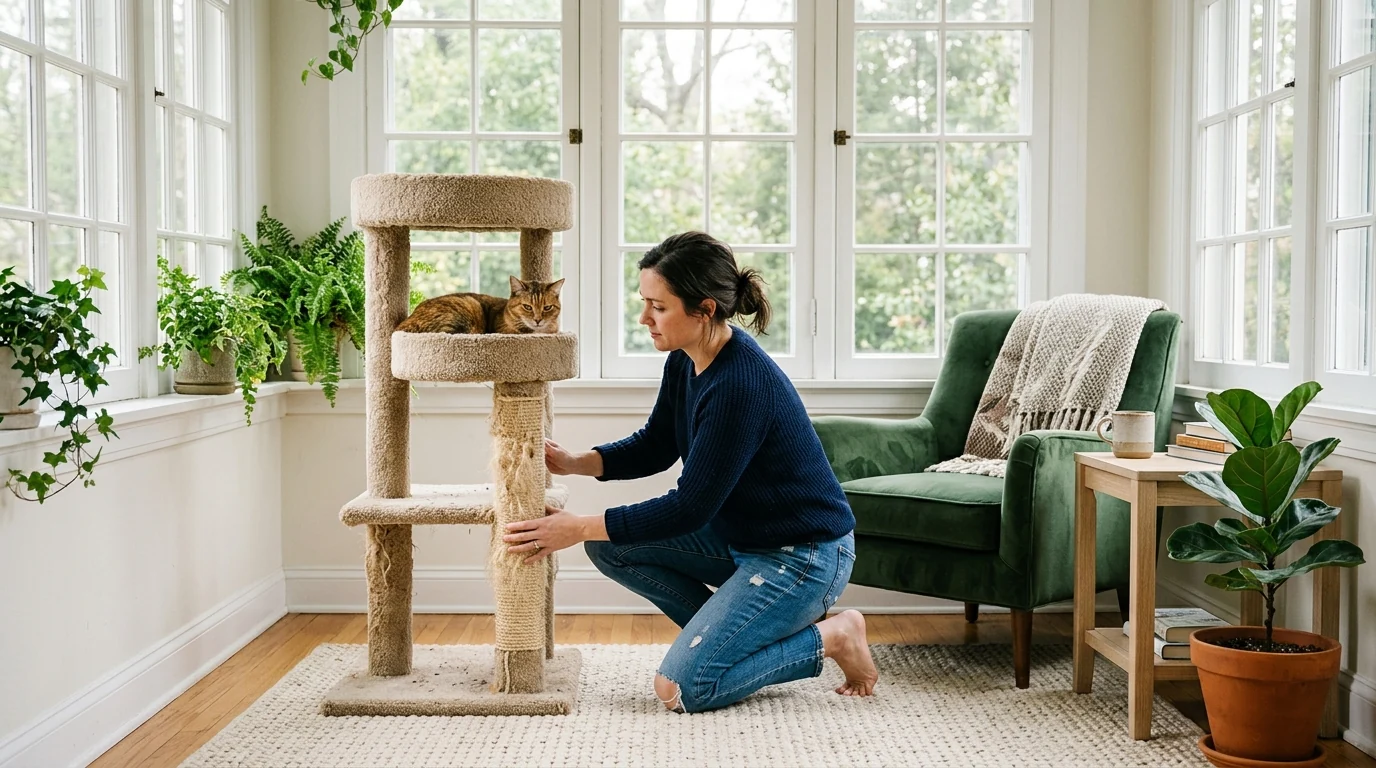
Most cat towers last about two to five years, although construction quality and daily use can shift that range considerably. A compact particleboard tower used by one lightweight cat may remain stable for several years, while a heavily used tower in a multicat home can wear out sooner.
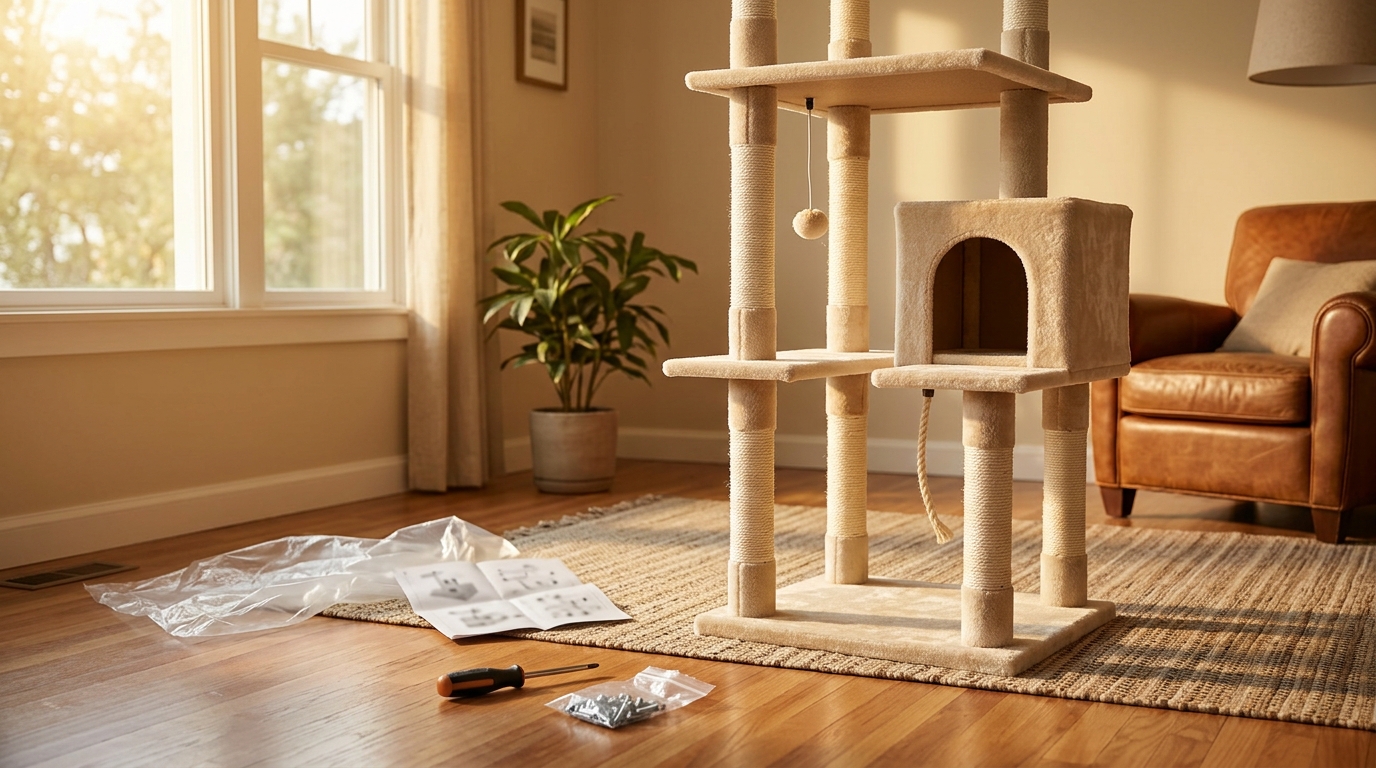
Solid wood or plywood frames generally outlast towers made from thin particleboard or cardboard. Look for thick sisal rope, dense upholstery, reinforced platforms, and metal fasteners; tightening loose bolts every few months can prevent wobbling and extend the tower’s usable life.
Featured in this guide
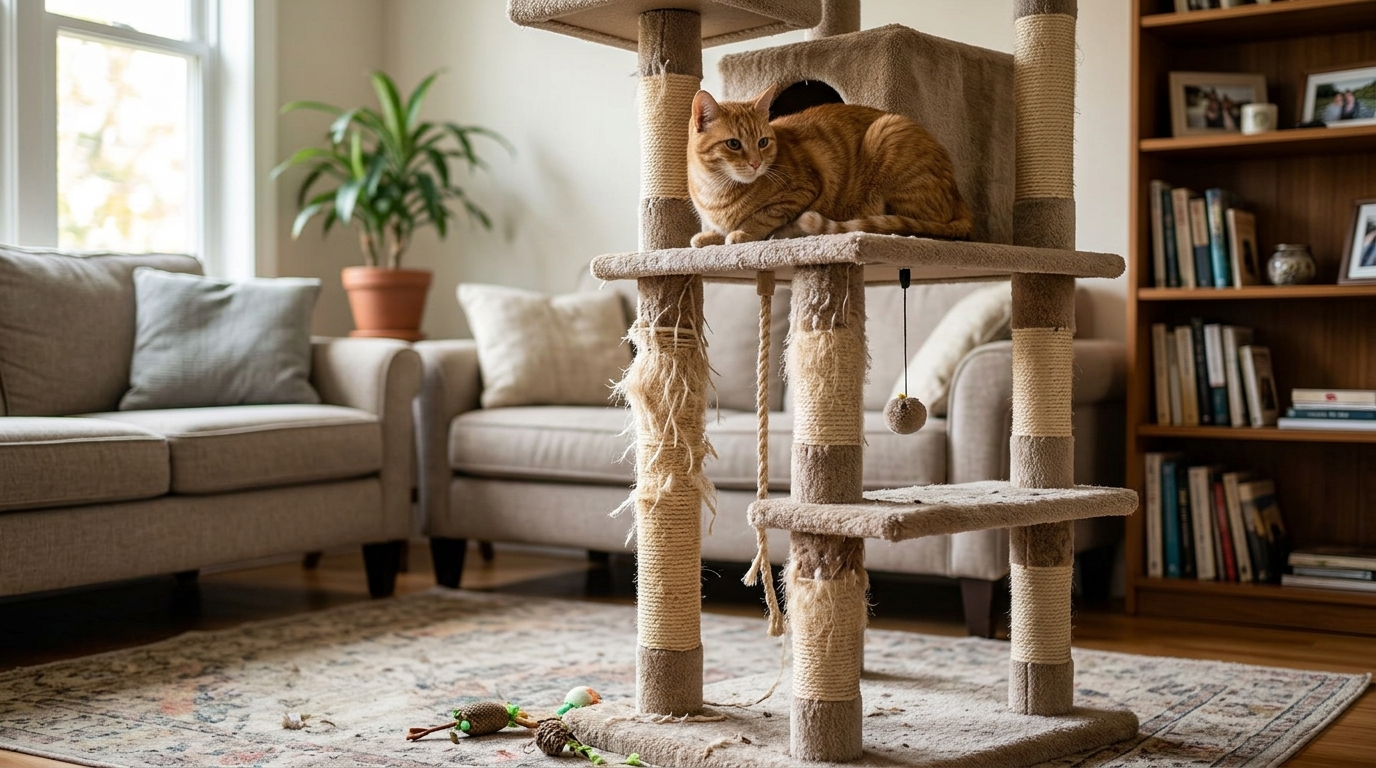
68-Inch Multi-Level Cat Tree Tower for Large Cats with Scratching Posts & Plush Perches
Replace the tower if its base rocks, platforms sag, fasteners no longer tighten, or structural panels are cracked. Frayed sisal and worn fabric can often be repaired, but exposed staples, sharp edges, persistent odors, or unstable perches create safety concerns that cosmetic fixes cannot solve.
Position the tower on a level, dry floor and confirm that tall models are compatible with a wall anchor or anti-tip strap. Vacuum fur weekly, spot-clean stains with a pet-safe cleaner, rotate reversible cushions, and replace damaged scratching rope before cats reach the underlying post.
Usage, materials, maintenance, and stability ultimately determine replacement timing. For a fuller breakdown of durability and warning signs, read how long cat towers are supposed to last.
Cats commonly live around 12 to 18 years, and many indoor cats reach their late teens or early twenties. Genetics, veterinary care, nutrition, environment, and chronic health conditions all influence a cat’s lifespan.
Many cats enjoy cat towers because they provide elevated resting spots, scratching surfaces, exercise, and a secure view of the room. Place the cat tower near a window or familiar gathering area to encourage use.
Cat towers can be expensive because large models require substantial framing, upholstery, sisal, hardware, packaging, and shipping. Solid wood, replaceable components, washable covers, and stronger weight ratings can also increase the price.



Leave a comment
You must be logged in to post a comment.