10% off on product page · save $83.99
Non-Toxic Cat Trees: Safer Materials and Buying Tips
Yes, cat trees made with thoughtfully selected, low-toxicity materials are available. Because “non-toxic” is not a universally regulated label for pet furniture, review the complete material list rather than relying on the product name alone.
Look for transparent descriptions of the frame, covering, adhesives, finishes, and scratching surfaces. If these details are missing, contact the manufacturer before purchasing.
Solid, unfinished wood and formaldehyde-free plywood are practical frame options. Engineered wood may also be suitable, but ask whether it meets low-emission standards such as CARB Phase 2 or TSCA Title VI.
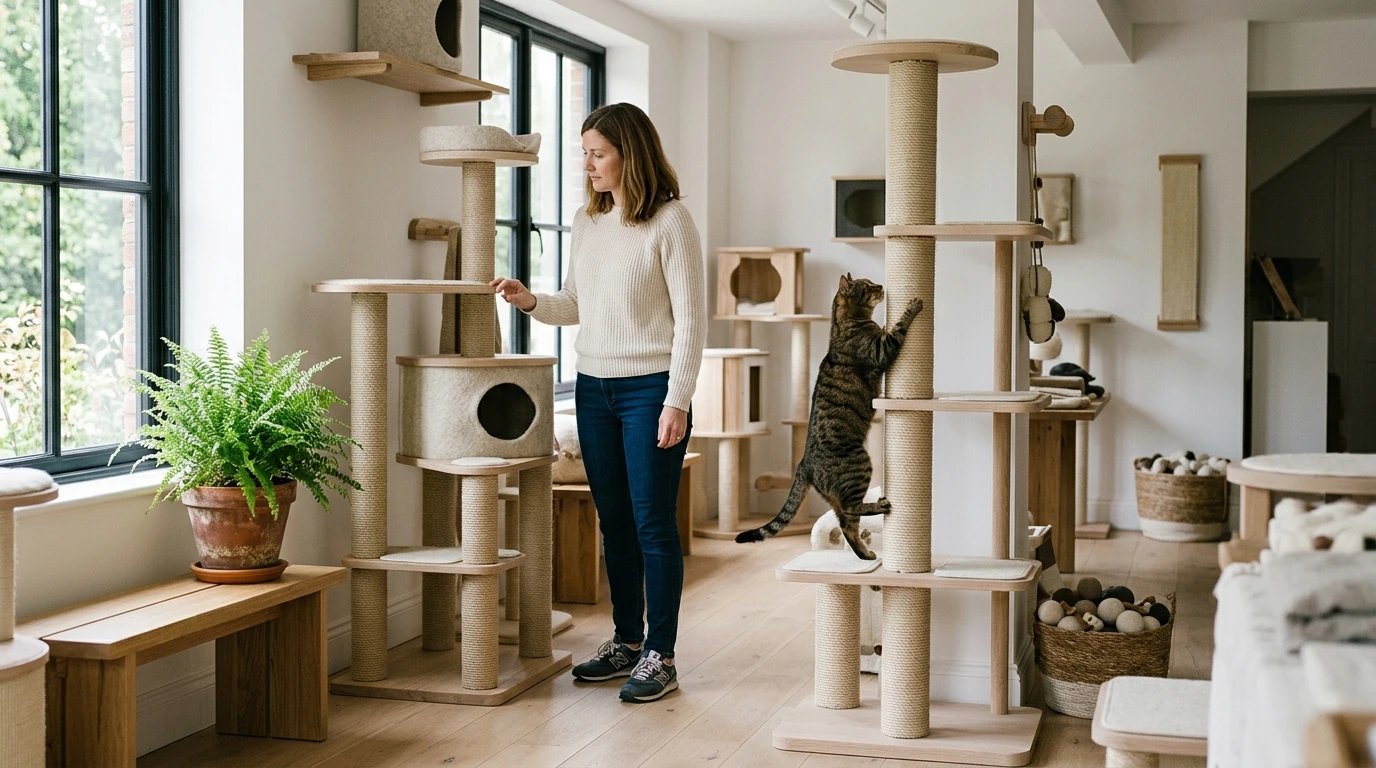
The structure should also be stable enough for your cat’s weight and activity. Compare the stated weight limit with your cat’s weight, and choose a base broad enough to resist tipping during a running jump.
Featured in this guide
Modern Cat Climbing Tree with Multifunctional Table and Scratching Post
Prefer water-based, low-VOC finishes and adhesives with clearly disclosed ingredients. Avoid products with a strong chemical odor, flaking paint, exposed glue, or stain that transfers when wiped with a damp white cloth.
For padded areas, removable cotton, wool, or certified low-emission upholstery simplifies inspection and cleaning. Let any newly unpacked tree air out in a ventilated room before allowing regular use.
Natural sisal rope, sisal fabric, and untreated cardboard are common scratching materials. Inspect the surface weekly and trim or replace loose fibers that could be swallowed or wrapped around a claw.
Confirm that staples, screws, and rope ends are recessed or securely covered. A replaceable scratching panel can extend the furniture’s useful life without requiring replacement of the entire structure.
A safer cat tree should remain secure after months of climbing. Retighten hardware regularly, anchor tall models to a wall when instructed, and measure the intended area before ordering so platforms do not obstruct doors or walkways.
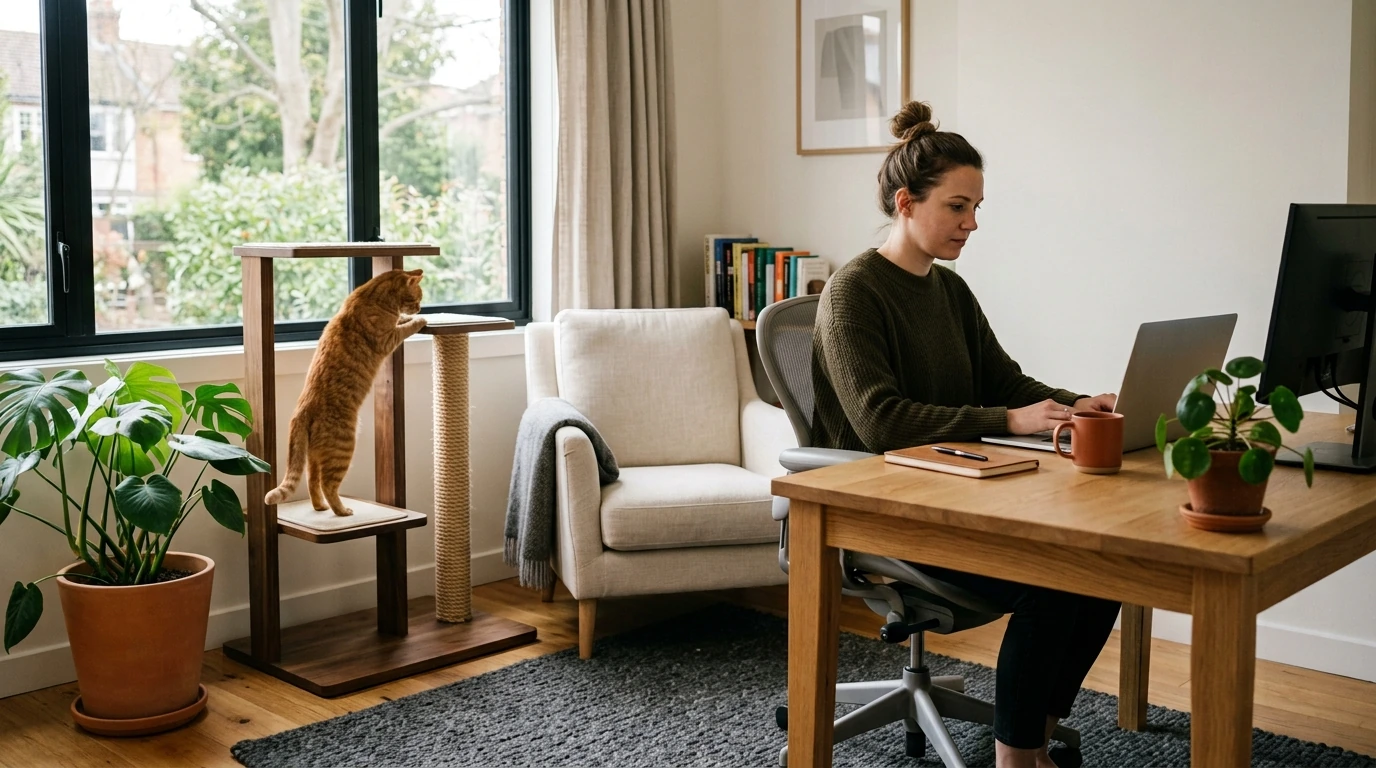
Replaceable covers, posts, and cushions make maintenance easier and reduce waste. For additional design and buying considerations, see the guide to modern cat climbing trees, tables, and scratching posts.
The best non-toxic cat tree has a stable solid-wood or low-emission plywood frame, natural sisal, and clearly disclosed low-VOC finishes and adhesives. It should also match your cat’s weight, provide secure platforms, and have replaceable components for safe long-term use.
Living trees and tree-like houseplants generally considered non-toxic to cats include the money tree, areca palm, and parlor palm. Confirm the plant’s scientific name before purchase, avoid pesticide-treated foliage, and remember that chewing even a non-toxic plant may cause stomach upset.


Leave a comment
You must be logged in to post a comment.