10% off on product page · save $83.99
Modern Cat Climbing Tree: Elevated Territory, Refined for the Room
Combining a climbing structure, scratching post, and functional table can use floor space more efficiently than arranging several unrelated items around a room. Instead of hiding bulky pet furniture in a spare area, owners can create a cat-friendly station that remains part of a living room, bedroom, office, or reading corner.
The modern, multifunctional concept is especially appealing when every piece of furniture needs to earn its place. The table surface may provide a practical household feature while keeping the cat’s activity area close to everyday life. Before deciding how to use that surface, consult the product specifications and care instructions for any limitations.
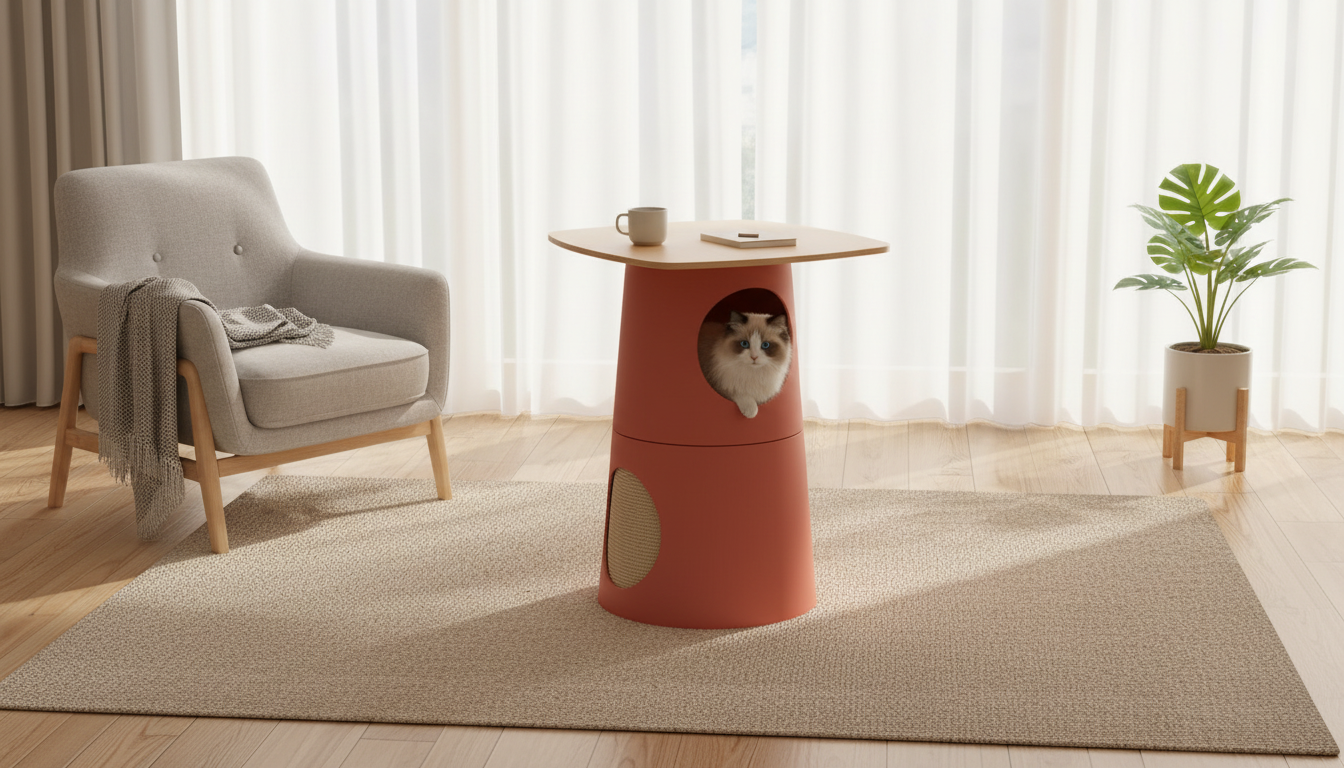
Featured in this guide
Modern Cat Climbing Tree with Multifunctional Table and Scratching Post
Climbing supports natural feline behaviors including observation, exploration, movement, and access to elevated resting areas. Vertical furniture increases usable territory without requiring a larger room, while a higher vantage point may help a cat watch household activity from above busy foot traffic.
Individual preferences remain decisive. Confident climbers may explore higher levels quickly, while kittens, senior cats, and cats with mobility limitations may benefit from closer platform spacing, easier routes, and a gradual introduction.
The best arrangement is not necessarily the tallest one. It is the configuration a particular cat can approach, climb, and leave comfortably.

The design brings together three central roles: a route for climbing, an appropriate place to scratch, and a multifunctional table element. Each serves a distinct purpose, but their combination creates the more considered result.
| Feature | Purpose for the cat | Household role |
|---|---|---|
| Climbing structure | Supports elevation, observation, and active movement | Adds vertical enrichment within a defined footprint |
| Scratching post | Provides a designated place to scratch and stretch | May help redirect attention from furniture when introduced properly |
| Multifunctional table | Keeps the activity area close to household life | Combines pet furniture with a table-style element |
| Modern appearance | Creates an inviting station in a frequently used room | Can coordinate naturally with contemporary interiors |
Successful use still depends on stability, placement, the cat’s size and mobility, and whether the scratching texture suits the cat’s preferences.
Place the structure on a level, stable surface and follow all manufacturer instructions for assembly, positioning, and anchoring. A location near a secure window or family activity area may be appealing, provided it does not obstruct doors, vents, or walkways.
Cats often scratch near sleeping areas, entrances, or surfaces they already target. Positioning the post close to an established scratching location may make the new option easier to discover.
In a multi-cat household, one structure may not provide enough choice. Additional elevated resting places and scratching surfaces can help prevent a single station from becoming a contested resource.
Let the cat investigate at its own pace rather than placing or holding it on an elevated platform. Treats, toys, familiar bedding, and calm attention can create positive associations. Reward appropriate scratching promptly, especially during the first days of use.
If the cat hesitates, reconsider accessibility and placement before assuming a lack of interest. A quieter location or easier route may make the difference.
This design may suit a style-conscious household seeking one statement piece that combines feline enrichment with a furniture function. It is particularly relevant for indoor cats that enjoy climbing, observing from elevated positions, or scratching upright surfaces.
Before ordering, verify the measurements, platform spacing, materials, cleaning guidance, assembly instructions, return terms, and suitability for the individual cat. The strongest choice is stable, proportionate to the available room, and accessible for the cat expected to use it.
For routine pet care alongside environmental enrichment, the Soft Dog & Cat Toothbrush Set provides another cat-friendly household option.
The 3-3-3 rule is a general adjustment guideline suggesting that a newly adopted cat may need about three days to decompress, three weeks to learn the household routine, and three months to feel settled. Adjustment times vary considerably by cat.
Common names include cat trees, cat towers, climbing trees, activity centers, cat condos, and climbing furniture. Wall-mounted versions are often called cat shelves or cat climbing systems.
Switzerland is especially well known for outdoor cat ladders attached to homes and apartment buildings. These structures allow some cats to travel between elevated residences and outdoor areas.
Most cats are naturally motivated to climb because elevated positions support exploration, observation, movement, and a sense of security. Preferences vary according to age, health, confidence, and experience.
The best option is a stable tree with accessible levels, appealing scratching textures, and enough space for the cat to rest comfortably. Its height and layout should match the cat’s size, mobility, and climbing confidence.
The best cat tree for indoor cats in 2026 is a stable, multi-level model with scratchable surfaces, comfortable resting areas, and platforms sized for your cat. Look for a wide base, replaceable sisal, low-emission materials, and a design that can be anchored to the wall.



Leave a comment
You must be logged in to post a comment.