
10% off on product page · save $83.99
When to Replace a Cat Tree: Lifespan & Safety Signs
Most cat trees need replacement every two to five years, although durability depends on construction, daily use, and the number and size of your cats. A sturdy wood-based tree may last longer, while a lightweight model made with cardboard supports or thin particleboard can wear out sooner.
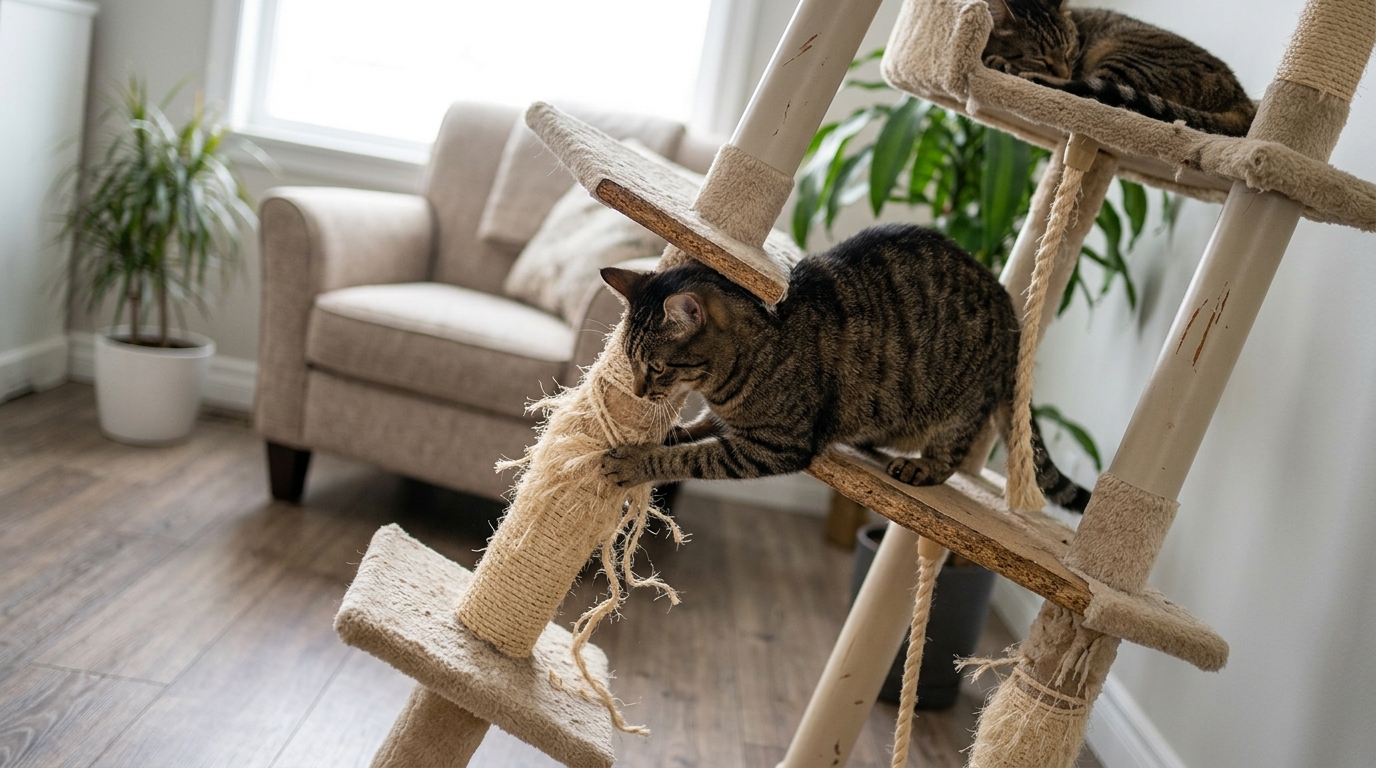
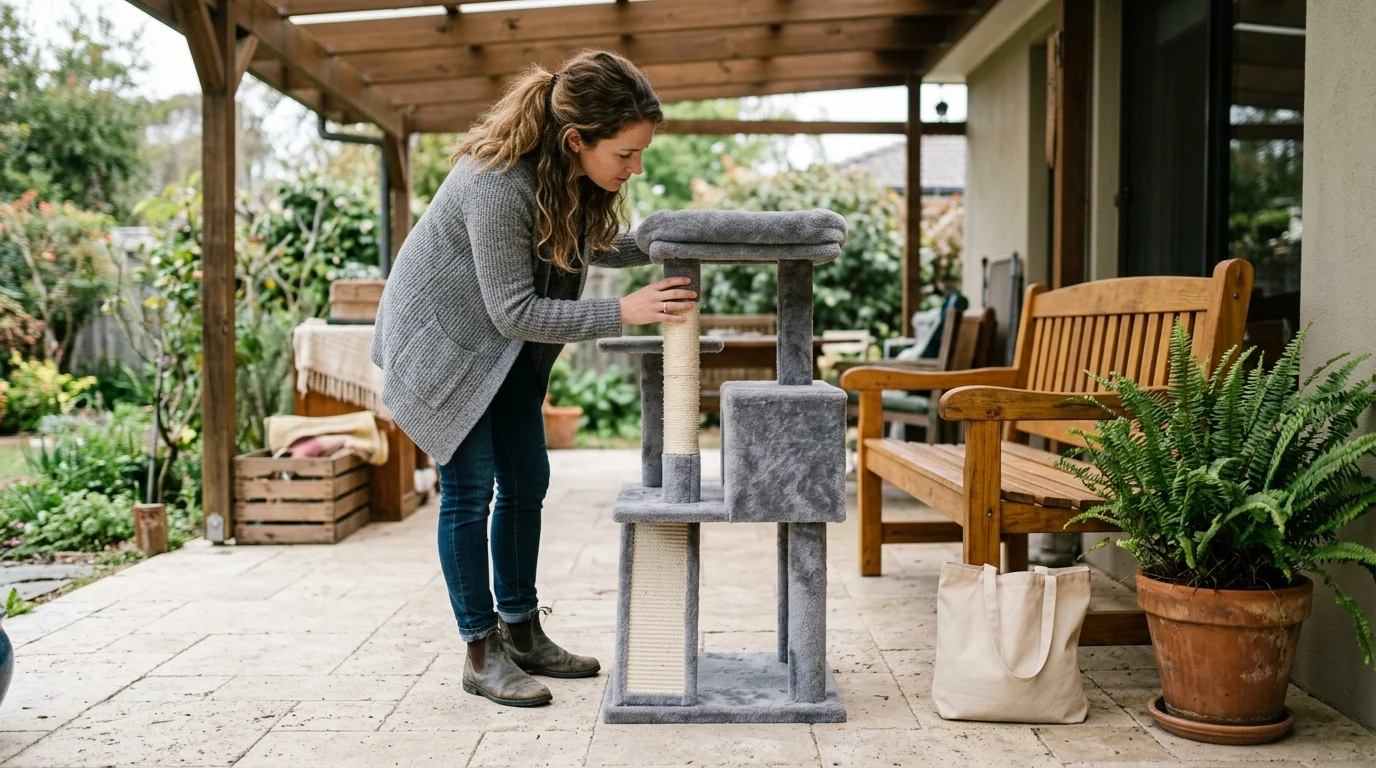
Normal cosmetic wear does not necessarily mean the entire cat tree is finished. Replacement becomes important when the base rocks, platforms tilt, fasteners no longer stay tight, or support posts crack. Test stability monthly by gently pushing each level and tightening accessible screws or bolts.
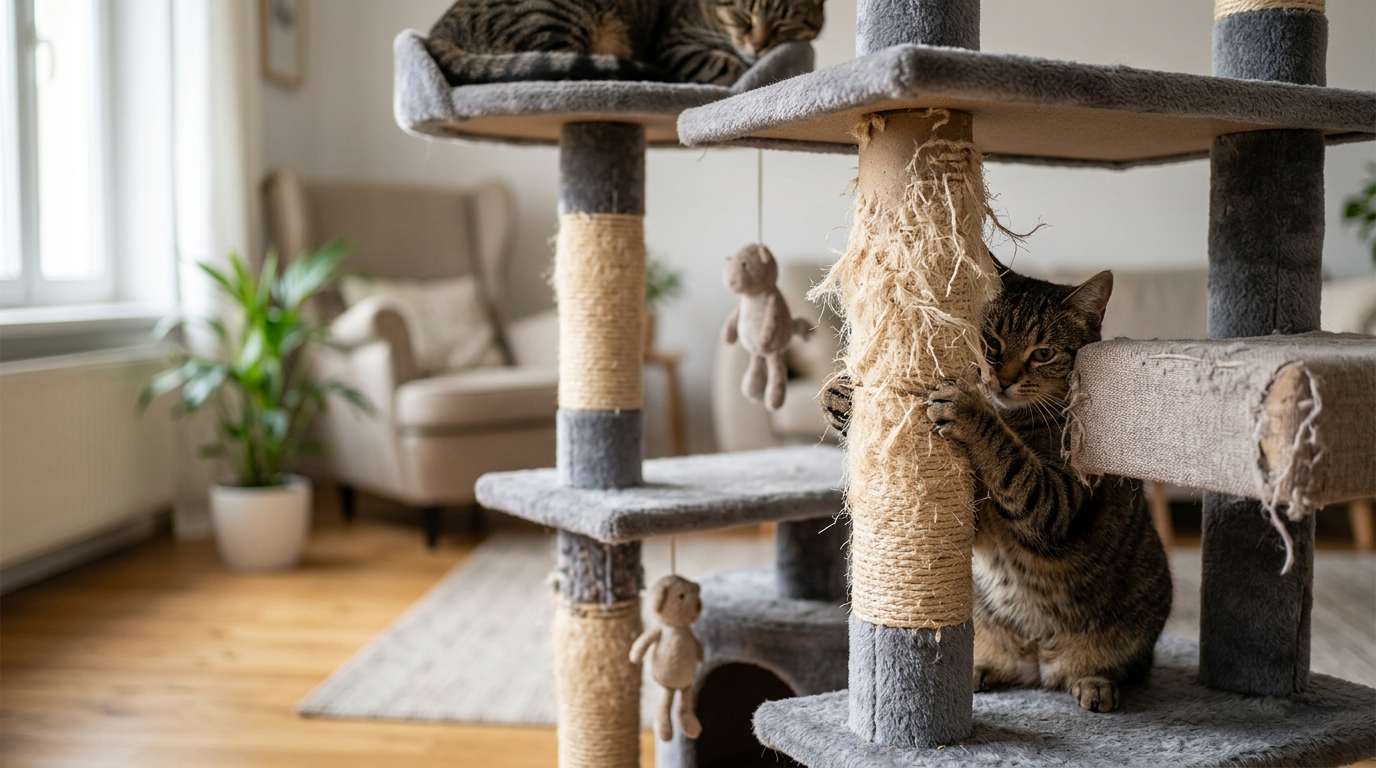
Featured in this guide
Modern Cat Climbing Tree with Multifunctional Table and Scratching Post
Frayed sisal rope can often be replaced, but exposed staples, sharp edges, loose carpet, and splintered wood are safety concerns. Persistent odors, mold, or stains that cannot be cleaned are also good reasons to discard the tree. Vacuum fabric weekly and follow the manufacturer’s cleaning instructions.
Look for a wide base, secure hardware, replaceable scratching components, and platforms sized for your cat. Multi-cat homes may benefit from solid wood or thick engineered-wood construction with several resting areas. Explore additional features and placement ideas in this guide to modern cat climbing trees, tables, and scratching posts.
Cats nearing the end of life may hide, eat less, sleep more, become weak, or show changes in breathing and grooming. Contact a veterinarian promptly if your cat displays these symptoms.
Throw out a cat tree when it wobbles despite tightening, has broken supports, exposes sharp hardware, or cannot be cleaned effectively. Replace it immediately if structural damage could cause a fall.

Leave a comment
You must be logged in to post a comment.