10% off on product page · save $83.99
How to Stop a Cat From Attacking Your Christmas Tree
Place the tree away from sofas, shelves, and tables that can serve as launching points. Secure its base with a wide, heavy stand, then anchor the upper trunk to a wall stud with clear fishing line or a discreet safety strap.
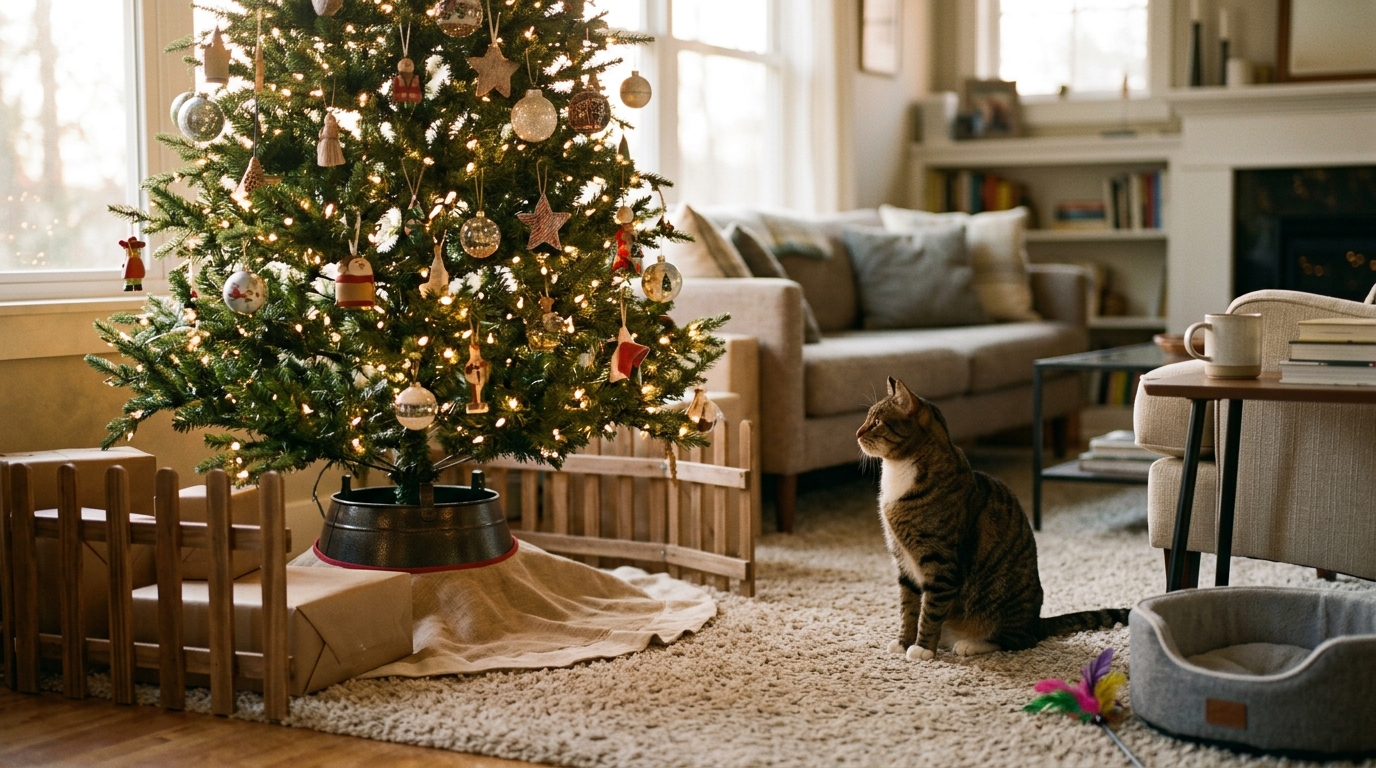
Surround the lower 2 to 3 feet of the tree with a pet gate, decorative fence, or sturdy playpen panels. Cover the stand and water reservoir so your cat cannot drink treated tree water, chew the trunk, or paw at loose hardware.
Featured in this guide
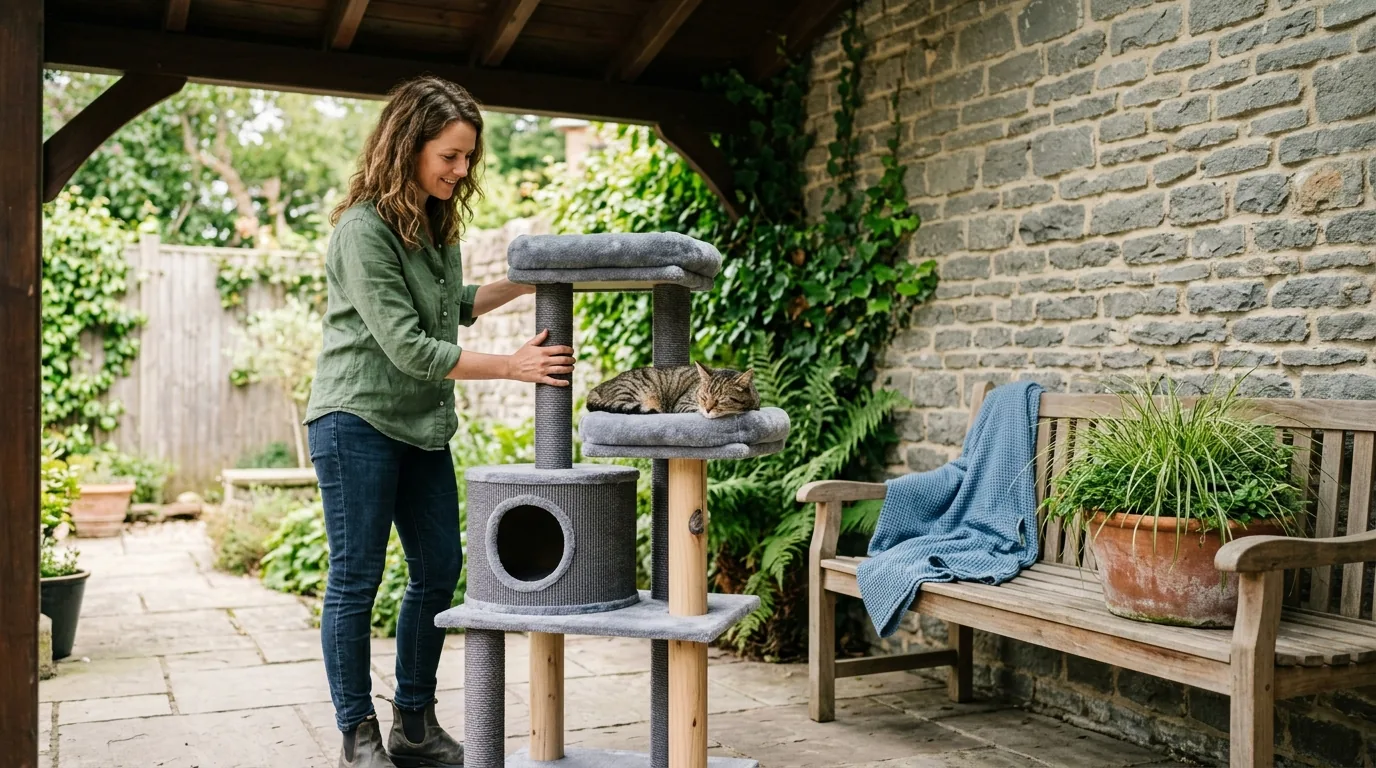
Modern Cat Climbing Tree with Multifunctional Table and Scratching Post
Leave the lowest branches bare and hang ornaments with ribbon or wire rather than sharp metal hooks. Avoid tinsel, edible garlands, glass ornaments, and dangling electrical cords; use cord covers and unplug the lights whenever the tree is unattended.
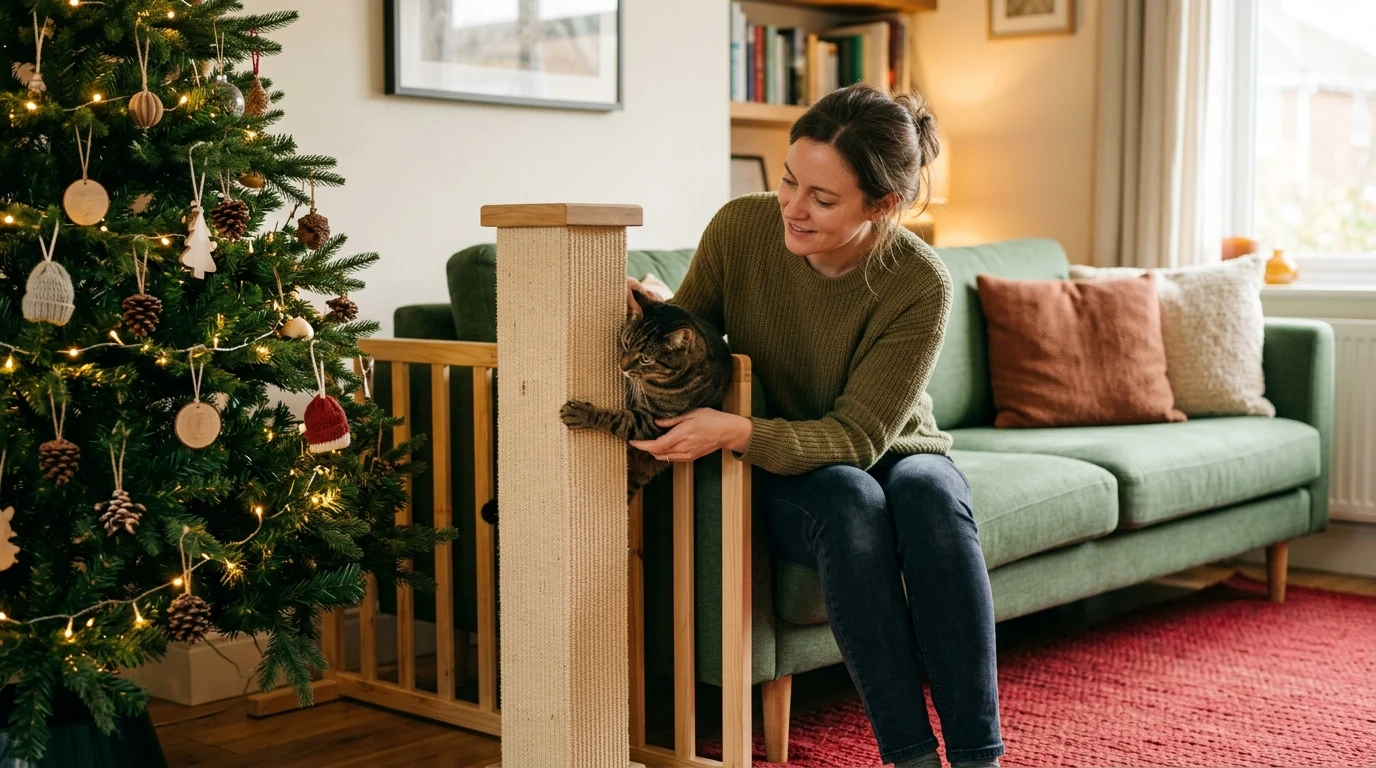
Redirect climbing behavior with a stable cat tree or scratching post positioned in another part of the room. Add treats, catnip, or a favorite toy to the approved perch, and explore this guide to modern cat climbing trees and scratching posts for suitable alternatives.
Check the listed dimensions for offer a better place to climb against the available vehicle space before use.
Apply a cat-safe commercial deterrent to the tree skirt or barrier only after checking its label and testing the material. Reward your cat for sitting quietly near the tree, and redirect attacks with an interactive wand toy instead of shouting or spraying water.
Stop your cat from attacking the Christmas tree by blocking access, anchoring the tree, and removing low-hanging decorations. Provide daily play sessions and reward your cat for using an alternative climbing perch.
Cat-safe commercial sprays, physical barriers, and uncomfortable surfaces around the base can repel cats from the Christmas tree. Avoid essential oils, pepper, mothballs, and homemade chemicals because they may be toxic or irritating.
Prevent your cat from biting the Christmas tree by covering the trunk, blocking lower branches, and promptly removing fallen needles. Offer safe chew toys and consult a veterinarian if persistent chewing suggests stress, dental discomfort, or pica.
Many cats dislike strong citrus, vinegar, mint, and menthol smells, but reactions vary. Never apply concentrated essential oils near a cat because inhalation, skin exposure, or ingestion can cause poisoning.



Leave a comment
You must be logged in to post a comment.