10% off on product page · save $83.99
Best Materials for a DIY Cat Tree: A Practical Guide
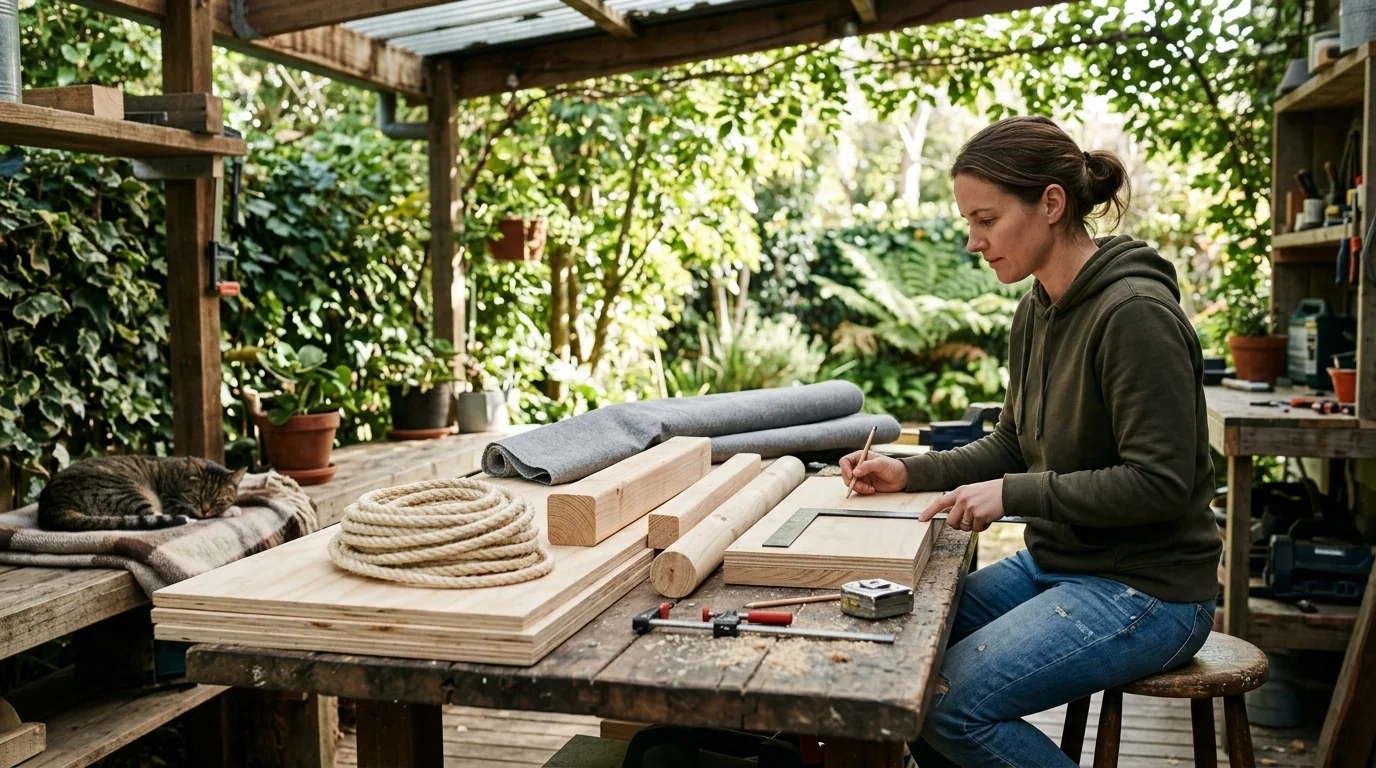
The best foundation for a DIY cat tree is 3/4-inch plywood because it is strong, stable, and less likely to split than particleboard. Pair it with solid wood posts, sisal rope, and low-pile carpet or upholstery fabric to create durable climbing, scratching, and resting surfaces.
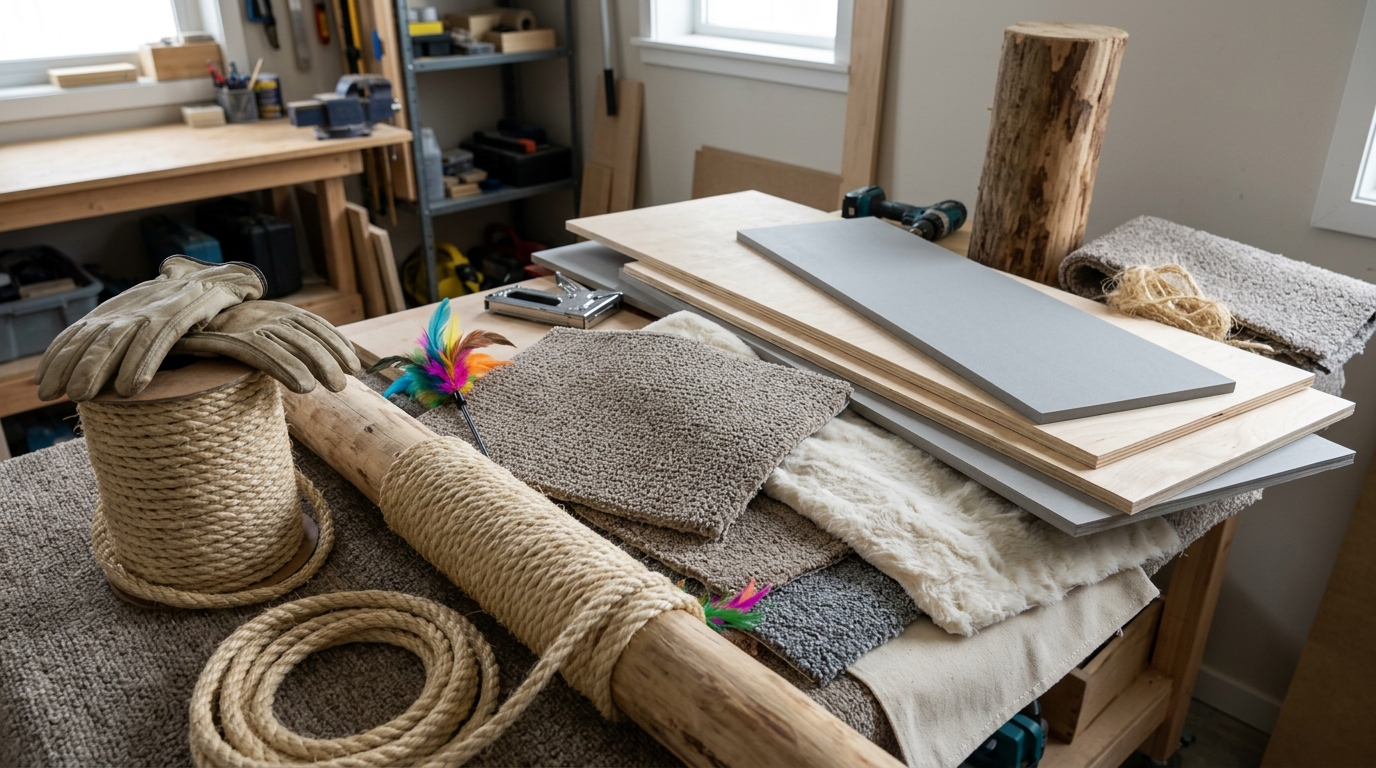
Use furniture-grade plywood for the base, platforms, and enclosed cubbies. A base measuring at least 24 by 24 inches helps stabilize a medium-height tree, while taller designs may require a wider footprint or wall anchors.
Featured in this guide
Modern Cat Climbing Tree with Multifunctional Table and Scratching Post
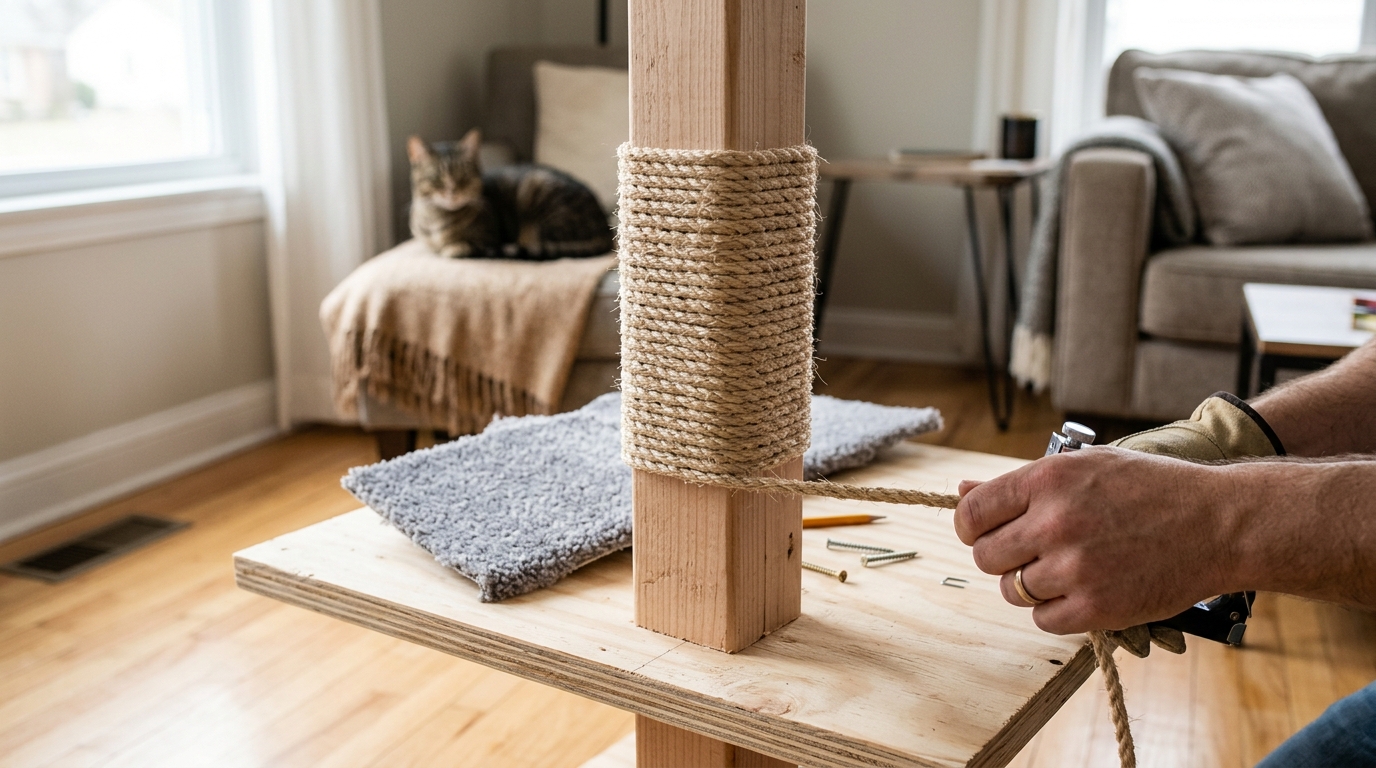
Solid wood posts, kiln-dried lumber, or thick cardboard concrete-form tubes can support platforms when properly secured. Attach wooden posts with bolts and metal brackets rather than relying only on nails, and check that every level remains rigid under your cat’s weight.
Natural sisal rope is the preferred post covering because its coarse fibers withstand repeated scratching. Wrap 1/4- to 3/8-inch rope tightly around each post, securing the ends with staples placed where paws cannot reach.
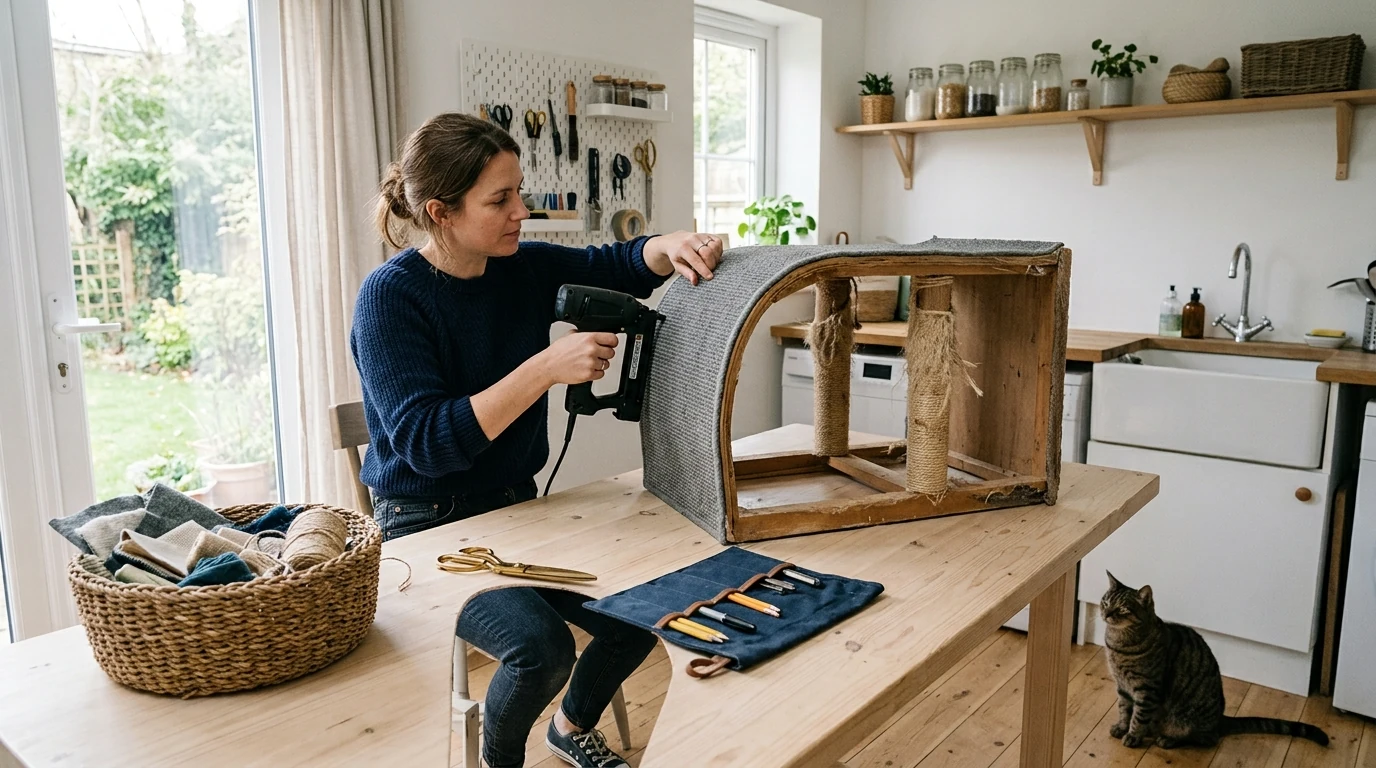
Low-pile carpet, fleece, and upholstery fabric provide traction without creating large loops that can snag claws. Use water-based, low-VOC adhesive and allow it to cure completely before use; avoid exposed staples, treated lumber, and loose fibers.
Large or active cats need thicker posts, broader platforms, and reinforced joints, while kittens benefit from shorter distances between levels. For more layout and furnishing ideas, explore this guide to modern cat climbing trees, tables, and scratching posts.
Check the listed dimensions for plan the tree around your cat against the available vehicle space before use.
The best material for a cat tree is 3/4-inch plywood combined with solid wood supports. Add sisal rope for scratching and low-pile fabric for comfortable, claw-safe platforms.
Materials needed to build a cat tree include plywood, support posts, screws, brackets, sisal rope, and durable fabric. You will also need a drill, staple gun, saw, and cat-safe adhesive.
A DIY cat tree can be cheaper when you reuse lumber, carpet remnants, or existing tools. Buying may cost less if you need to purchase every material and tool from scratch.
The best weatherproof outdoor cat tree uses exterior-grade plywood, cedar supports, stainless-steel hardware, and UV-resistant outdoor fabric. Place it beneath a roof and seal all wood with a cured, pet-safe exterior finish.
Low-pile carpet is the fabric most commonly used for cat trees because it offers traction and durability. Fleece, felt, and tightly woven upholstery fabric are also practical options for padded resting areas.



Leave a comment
You must be logged in to post a comment.