10% off on product page · save $83.99
Is It Cheaper to Build Your Own Cat Tree? Cost Guide
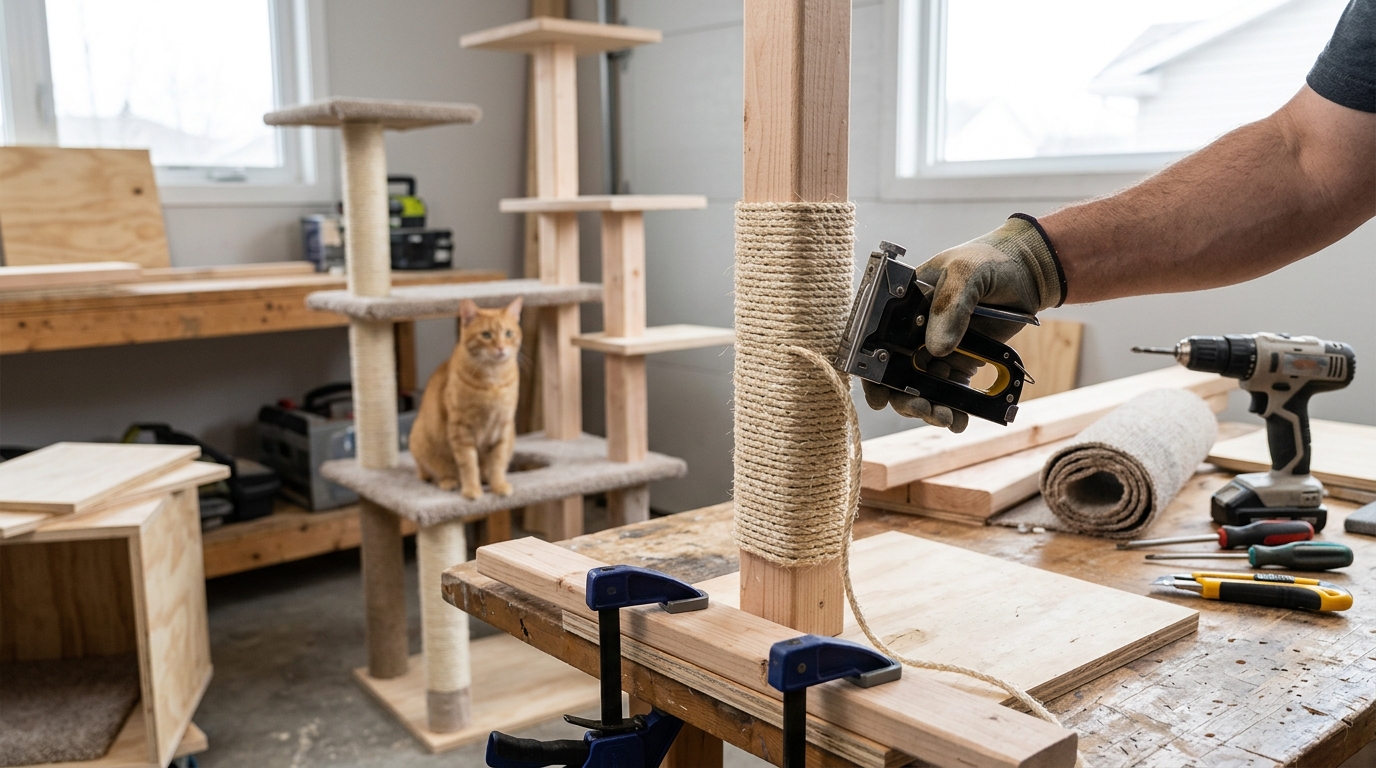
Plywood, solid lumber, sisal rope, upholstery fabric, screws, and brackets determine most of the budget. Price materials before starting: a 4-by-8-foot plywood sheet, 100 feet of sisal rope, and sturdy fasteners can quickly make a complex build more expensive than an entry-level premade model.
Featured in this guide
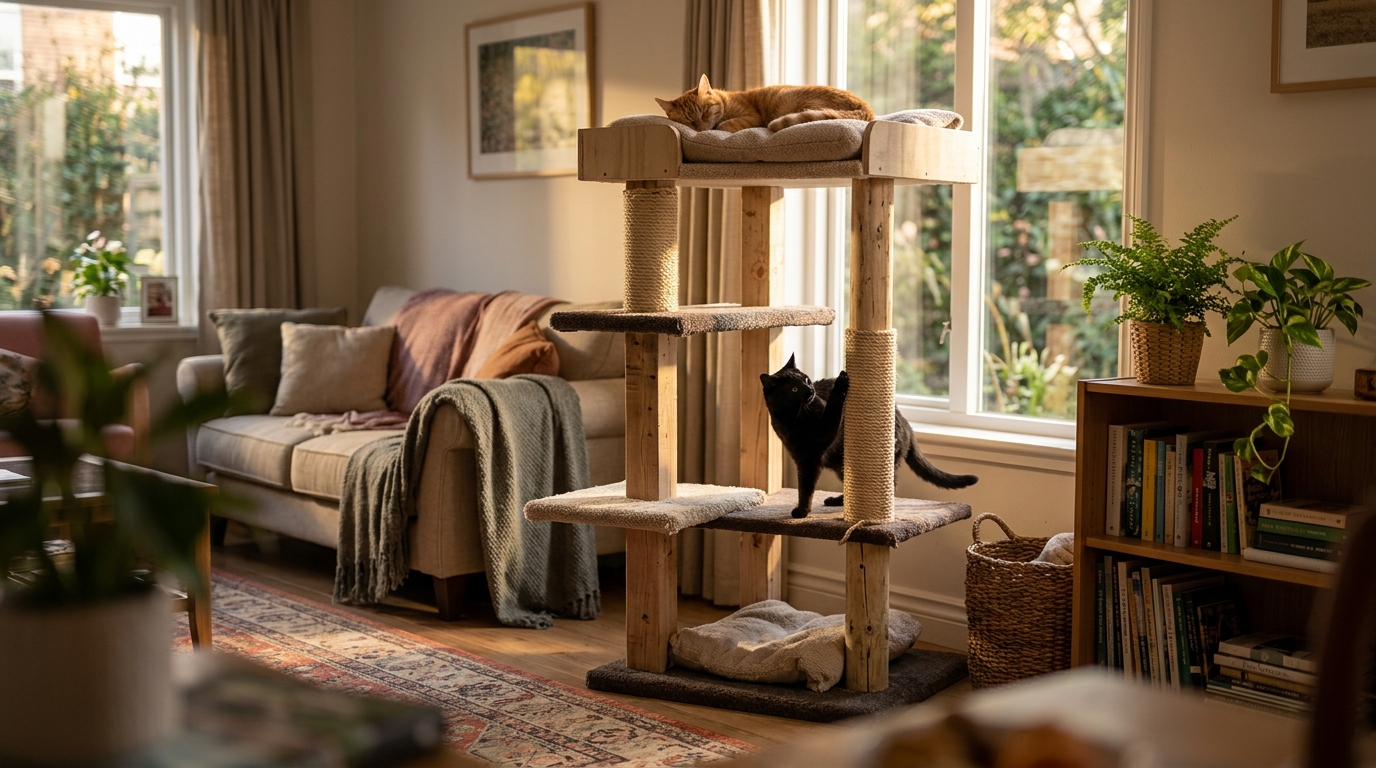
Modern Cat Climbing Tree with Multifunctional Table and Scratching Post
DIY construction offers the best value when you use leftover lumber and build a compact structure with one platform and one scratching post. Measure the available floor area and your cat’s fully stretched length, then make each platform at least large enough for the cat to turn around and lie down comfortably.
A homemade cat tree needs a wide, heavy base and connections that will not loosen during jumping or scratching. Use untreated wood, pet-safe adhesive, recessed screw heads, and tightly wrapped sisal; then push the finished structure from several directions to check for wobbling before use.
Buying is often more practical if you need multiple levels, enclosed beds, or a furniture-style finish without spending hours cutting and assembling materials. Compare your complete supply list and estimated labor with the options in this guide to modern cat climbing trees, tables, and scratching posts before choosing.
It is usually cheaper to build a cat tree when you already have tools and reusable materials. Buying may cost less if you must purchase lumber, coverings, hardware, and power tools from scratch.
Building your own cat tree is moderately difficult if it involves cutting wood, drilling pilot holes, and securing platforms. A basic one-post design is manageable for many beginners, but tall structures require stronger joinery and careful stability testing.


Leave a comment
You must be logged in to post a comment.