25% off on product page · save $5.00
The Art of Looking Effortlessly Polished
Casual-chic style combines relaxed wardrobe essentials with refined details. Denim, T-shirts, sneakers, knitwear, and loose silhouettes provide comfort, while tailored layers, structured bags, elegant shoes, jewelry, and polished fabrics add sophistication.
The difference often comes down to intention. Coordinated colors, balanced proportions, clean shoes, wrinkle-free clothing, and thoughtful finishing touches can make simple basics look elevated. You do not need an entirely new wardrobe or expensive designer labels. A well-fitting blazer or neat leather belt may be enough to change the mood.
For historical inspiration on how everyday clothing and refined fashion have evolved, explore the Fashion History Timeline or collections from The Costume Institute.
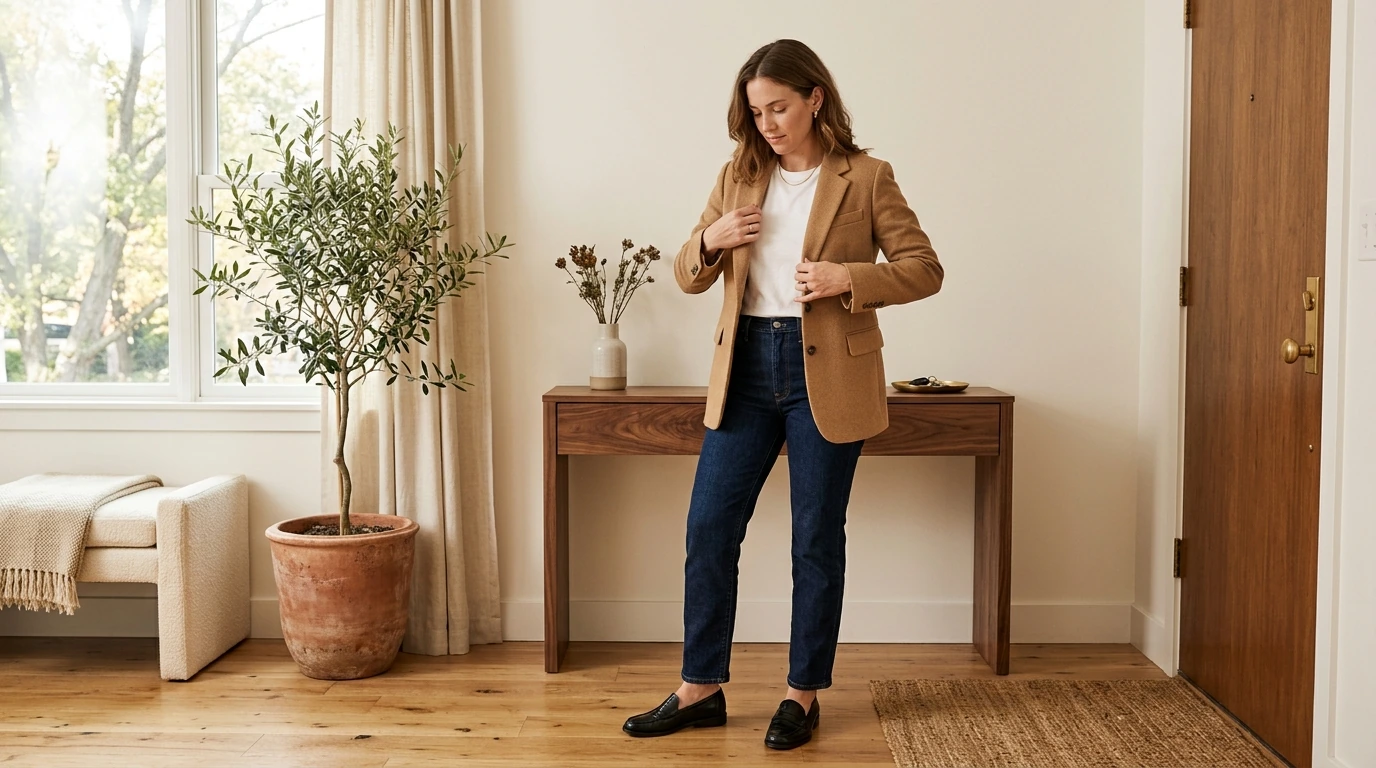
Start with a familiar casual foundation, such as straight-leg jeans and a fitted T-shirt. Add one or two polished elements—a tailored blazer, loafers, or a structured handbag—to sharpen the silhouette.
A flexible 70/30 balance offers a useful starting point. Allow casual or chic style to dominate, then introduce the other through a smaller group of details. The formula also works in reverse: soften tailored trousers, a sleek dress, or a suit with sneakers, relaxed knitwear, or a denim jacket.
Treat the ratio as a visual guide, not a rigid calculation. The goal is contrast that looks intentional rather than evenly divided.
Featured in this guide
The Art of Mixing Casual and Chic | Effortless Everyday Style Guide eBook | How to Mix Casual and Chic Looks with Confidence
Texture gives understated clothing depth. Cotton with leather, denim with a silk-like fabric, or chunky knitwear with tailored wool can communicate ease and refinement without relying on bold prints.
Shape matters just as much. Balance wide-leg trousers with a fitted top, or pair an oversized shirt with slim or straight-cut bottoms. If the silhouette is dramatic, keep patterns and accessories restrained.
Fit remains the quiet foundation of polish. Check the shoulders, waist placement, hems, sleeve length, and trouser break. Small alterations can make everyday clothing appear more considered.
Black, navy, cream, white, camel, gray, and chocolate brown make relaxed and dressier pieces easier to combine. These neutrals can form a dependable foundation without requiring every garment to match exactly.
For more personality, introduce an accent color, subtle print, metallic finish, or tonal variation. A 60-30-10-inspired approach can help: choose a dominant color, a secondary shade, and a smaller accent.
Repeat one color in a shoe, bag, belt, or piece of jewelry to connect contrasting elements visually.
Shoes can move the same outfit from relaxed to polished. Clean sneakers create ease, loafers add structure, ankle boots offer versatility, and metallic sandals bring occasion-ready shine.
Accessories should support the clothing rather than compete with it. A structured bag, simple watch, leather belt, or small earrings may provide all the refinement required. Keep casual footwear clean and in good condition so the result feels intentional.
For dresses, denim, and warm-weather separates, Women’s Summer Wedge Sandals offer a dressier alternative to everyday flats.
For work: combine dark denim or tailored trousers with a knit top, blazer, and loafers while respecting the workplace dress code.
For weekends: elevate jeans and a T-shirt with a neat jacket, coordinated accessories, and polished footwear.
For evenings: retain one comfortable piece, then add richer texture, jewelry, a defined silhouette, or an elegant shoe.
For travel: choose wrinkle-resistant layers in a coordinated palette so tops, bottoms, and outerwear can be rearranged into several outfits.
Check the listed dimensions for adapt the formula to the occasion against the available vehicle space before use.
Casual should not mean neglected. Wrinkles, stains, damaged shoes, and poor fit can weaken an otherwise thoughtful combination. At the opposite extreme, too many elevated pieces may make an effortless outfit feel overworked.
Avoid trends that restrict movement or feel disconnected from your personality. Before leaving, review the entire silhouette. If several details compete for attention, remove one and allow the strongest element to lead.
The 70/30 rule creates visual hierarchy by allowing roughly 70% of a composition to establish the dominant idea and 30% to provide contrast. In fashion, one style can lead while a smaller group of details introduces a second aesthetic.
There is no universal set of three colors that cannot be combined. Success depends on undertones, saturation, proportion, and context; adjusting one shade or letting one color dominate often creates harmony.
The rule assigns about 60% of a composition to a dominant color, 30% to a secondary color, and 10% to an accent. The same flexible principle can make a multi-color outfit feel balanced.
Select one style as the visual foundation and introduce the second through a few contrasting elements. Repeating a color, texture, or silhouette helps the two styles appear connected.

Leave a comment
You must be logged in to post a comment.